
Table of Contents
ToggleHistoric Verdict: Supreme Court Scraps 3-Month Age Limit for Adoptive Maternity Leave
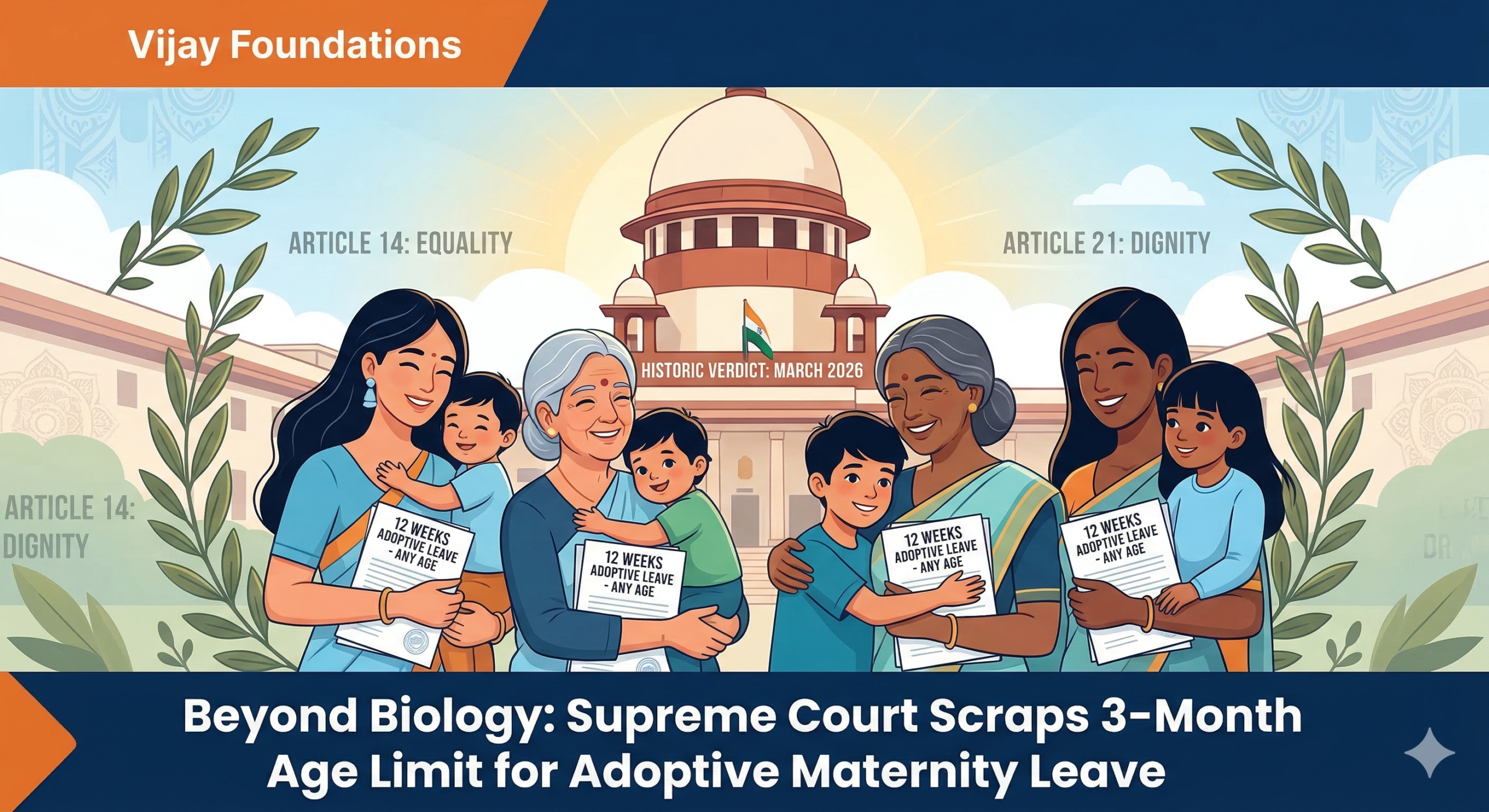
The rules for adoptive maternity leave in India have been redefined by a landmark judicial decision. For decades, the legal framework surrounding maternity benefits in India carried a silent but significant bias. While biological mothers were entitled to extensive support, adoptive mothers faced a restrictive “3-month age limit”—a rule that effectively denied adoptive maternity leave to the vast majority of parents choosing the path of adoption.
In a historic judgment delivered on March 17, 2026, the Supreme Court of India struck down this age cap, ensuring that adoptive maternity leave is accessible to all. This ruling doesn’t just change a line in a law book; it redefines the constitutional understanding of motherhood and family in India, placing the “heart-born” child on the same legal pedestal as the biological child.
The Landmark Verdict: New Rules for Adoptive Maternity Leave
The Supreme Court bench, comprising Justices J.B. Pardiwala and R. Mahadevan, ruled that the age-based classification for maternity benefits was unconstitutional. Previously, under Section 5(4) of the Maternity Benefit Act, 1961, only women adopting infants under 3 months qualified for adoptive maternity leave. The Court held that this restriction violated Article 14 (Right to Equality) and Article 21 (Right to Life and Dignity) of the Constitution.
- Removal of Age Cap: The 3-month age limit for children being adopted is officially scrapped.
- Universal Eligibility: All mothers are now entitled to 12 weeks of adoptive maternity leave, regardless of the child’s age.
- Effective Date: The leave period begins from the date the child is legally handed over to the adoptive parent.
Why the 3-Month Limit Was “Illusory” and Discriminatory
The Court observed that the 3-month rule made it nearly impossible for any parent to claim adoptive maternity leave. In the Indian legal landscape, the process regulated by the Central Adoption Resource Authority (CARA) to declare a child “legally free for adoption” is rigorous.
By the time all background checks, medical clearances, and legal paperwork are finalized, children are almost always older than three months. Consequently, the previous provision for adoptive maternity leave was “devoid of practical application,” offering a benefit that was effectively out of reach for almost every adoptive mother in the country.
Comparison of Benefits (Post-2026 Ruling)
| Category | Leave Duration | Pre-2026 Status | Post-2026 Ruling |
|---|---|---|---|
| Biological Mother | 26 Weeks | Standard (First 2 kids) | No Change |
| Adoptive Mother | 12 Weeks | Only if child < 3 months | Irrespective of Age |
| Commissioning Mother | 12 Weeks | Previously Unclear | Confirmed 12 Weeks |
| Paternity Leave | Varies | Limited (Govt Only) | Centre urged to law-make |
The Philosophical Shift: Bonding Beyond Biology
The judgment provides a deep legal shift in how we view parenting. The bench emphasized that the need for a mother to bond with her child does not depend on the child’s age. In fact, older children—especially those coming from institutional care—often require more time to adjust to their new environment. Denying adoptive maternity leave for these mothers was seen as a direct hit to the child’s psychological welfare.
Impact on the Private Sector and Corporate Policy
This ruling is a massive wake-up call for HR departments. Companies can no longer hide behind the “under 3 months” clause to deny adoptive maternity leave. This decision forces a rewrite of internal leave policies to ensure Compliance with constitutional mandates. Organizations that foster an Inclusive culture will find that supporting adoptive parents leads to higher employee retention and a more compassionate workplace.
Frequently Asked Questions (FAQ)
1. How much leave is an adoptive mother entitled to?
Post the 2026 Supreme Court verdict, every adoptive mother is entitled to 12 weeks of paid adoptive maternity leave, regardless of the child’s age at the time of adoption.
2. Does this apply to adopting older children or teenagers?
Yes. The Supreme Court specifically scrapped the age limit. Whether you adopt a 2-month-old infant or a child who is 12 years old, your right to adoptive maternity leave remains identical and legally protected.
3. When does the adoptive maternity leave officially start?
The leave starts from the date of “actual custody.” This is defined as the day the child is legally handed over to the mother by the adoption agency or CARA authorities.
4. Why was Article 14 and 21 invoked in this case?
The Court ruled that the previous age-cap was discriminatory (Article 14) because it treated mothers differently based on an arbitrary child-age limit. It also impacted the right to a dignified life (Article 21) for both the mother and the child.
Conclusion: A Win for Modern Families
The Supreme Court’s decision to scrap the age limit for adoptive maternity leave is a massive victory for Indian families. By removing this arbitrary barrier, the judiciary has affirmed that the bond of adoption is sacred and deserving of full protection under the law. At Vijay Foundation, we celebrate this move toward a more compassionate and equitable society.
Learn more about our advocacy efforts on our About Us page.