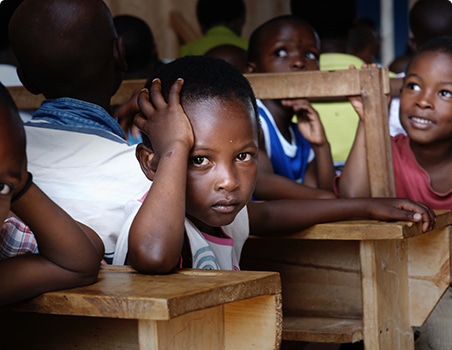

- 6–14Age group covered by Article 21A
- 25%Entry-level seats for weaker sections in private schools
- 1:30Pupil-teacher ratio for primary classes
- 200286th Amendment inserted Article 21A
Introduction
The right to quality education is at the heart of a massive wave of Gen-Z and student protests that has brought more than 40 French cities to a standstill. Their demands are fundamental: an end to severe teacher shortages, better funding for deteriorating school buildings, and a functional education system. While these protests are unfolding thousands of miles away, the core grievances resonate deeply within the Indian educational landscape.
In India, dilapidated classrooms, missing basic amenities, and an acute shortage of qualified teachers remain harsh realities in many districts. But unlike a mere policy demand, education in India is a constitutionally guaranteed fundamental right.
If a government school in your locality lacks a roof, clean drinking water, or adequate teaching staff, it is not just an administrative failure. It is a direct violation of the Constitution of India. This article explores the powerful legal framework of Article 21A and the Right of Children to Free and Compulsory Education (RTE) Act, 2009, empowering parents, citizens, and activists to hold the State legally accountable for the education of the next generation. Learn more about our work on the ground at Education & Literacy at Vijay Foundation.
The Legislative & Regulatory Backbone of the Right to Quality Education
The legal architecture protecting a child’s right to learn in India is built on strong constitutional and statutory foundations:
Article 21A of the Constitution of India
Inserted by the 86th Amendment in 2002, this article elevates education to the status of a fundamental right and anchors the right to quality education. It states:
“The State shall provide free and compulsory education to all children of the age of six to fourteen years in such manner as the State may, by law, determine.”
The Right of Children to Free and Compulsory Education (RTE) Act, 2009
This is the enabling legislation that brings Article 21A to life and gives practical shape to the right to quality education.
- Sec 19Norms and Standards: Mandates that no school shall be established or recognized unless it fulfills the norms specified in the Schedule of the Act. This includes all-weather buildings, barrier-free access, separate toilets for boys and girls, and safe drinking water.
- Sec 25Pupil-Teacher Ratio: Legally binds the government and local authorities to maintain a specific ratio of teachers to students (e.g., 1:30 for primary schools), explicitly prohibiting the practice of leaving schools unstaffed.
- Sec 27Prohibits the deployment of teachers for non-educational purposes (with exceptions like census, disaster relief and election duties), ensuring their primary focus remains in the classroom.
The Commissions for Protection of Child Rights (CPCR) Act, 2005
Designates the National Commission for Protection of Child Rights (NCPCR) and State Commissions (SCPCR) as the statutory bodies that monitor children’s right to education and inquire into violations of the RTE Act (Section 31 of the RTE Act and Section 13 of the CPCR Act).

Judicial Interpretation & Landmark Precedents
The Supreme Court of India has consistently expanded the scope of the right to education, making it clear that “free education” must also mean “quality education.” These rulings give real teeth to the right to quality education.
Environmental & Consumer Protection Foundation v. Delhi Administration
Principle Established: The Supreme Court directed all States and Union Territories to ensure that schools, whether state-run or private, provide basic infrastructure, including drinking water, separate toilets for boys and girls, and a safe building.
Practical Significance: The Court emphasised that the right to quality education remains hollow if children are forced to study in conditions lacking basic dignity and hygiene. This allows citizens to file writ petitions if local schools lack these facilities.
State of U.P. v. Shiv Kumar Pathak
Principle Established: Addressed the recruitment of teachers with qualifications different from national norms. The Court held that the minimum qualifications laid down by the National Council for Teacher Education (NCTE) are binding on the States.
Practical Significance: The State cannot compromise on the quality of teachers to fill vacancies, because the right to quality education depends on qualified teachers. A school staffed with “ad-hoc” teachers in violation of NCTE norms is open to challenge under the RTE framework.
Rights, Liabilities & Institutional Duties
The RTE Act assigns specific duties to various stakeholders to ensure the right to quality education is actually delivered:
State and Local Authority Duties
- Infrastructure: Must provide adequate school buildings and learning equipment within specific neighbourhood limits.
- Funding: The State and Central governments share concurrent responsibility for providing the necessary funds to implement the Act.
Citizen and Parent Rights
- No Capitation Fees: No child can be denied admission or subjected to screening procedures or capitation fees.
- 25% Reservation: Section 12(1)(c) mandates that private, unaided schools must reserve at least 25% of their entry-level seats for children from weaker sections and disadvantaged groups, with the government reimbursing the fees.
- School Management Committees (SMCs): Parents have the statutory right to form and participate in SMCs, which are legally empowered to monitor the working of the school and prepare the school development plan.
Practical Scenario: How to Enforce the Right to Quality Education
Suppose your local government school has been operating without a mathematics teacher for six months, the roof leaks during the monsoon, and there is no functional toilet. How do you enforce the law?
- Document the ViolationsTake clear photographs of the failing infrastructure. Submit a formal written application detailing the teacher shortage to the School Management Committee (SMC) and the local Block Education Officer (BEO), ensuring you get a stamped receiving copy.
- File an RTI ApplicationFile an application under the Right to Information (RTI) Act, 2005, asking the district education department about the sanctioned vs. actual teacher strength in that specific school, and the funds allocated for its maintenance over the last two years. If the reply says the record is missing, read When ‘Record Not Found’ Under RTI Becomes a Criminal Question.
- Lodge an NCPCR/SCPCR ComplaintIf the local authorities do not act, file a formal complaint online via the e-BaalNidan portal of the NCPCR, which has the powers of a civil court to summon officials. You can also lodge a written grievance with the local authority under Section 32 of the RTE Act.
- Public Interest Litigation (PIL)If statutory bodies fail, citizens, NGOs, or parents can file a Writ Petition (PIL) under Article 226 in the High Court, seeking a writ of mandamus to force the State to fulfill its constitutional duty under Article 21A. Need guidance? See our Free Legal Aid support.
Common Mistakes People Make
- Relying Only on Verbal ComplaintsComplaining verbally to the principal creates no legal record. Always submit written grievances to the BEO or District Education Officer (DEO).
- Ignoring the SMCMany parents do not realize that the School Management Committee is a legally recognized body with the power to audit school functioning. Bypassing it weakens grassroots accountability.
- Assuming Private Schools are ExemptMany parents are unaware of the 25% EWS (Economically Weaker Section) quota in private schools, missing out on quality education opportunities for disadvantaged children.
What You Should Do
- Actively participate in the School Management Committee (SMC) elections and meetings.
- Use the RTI Act strategically to expose unutilized education funds or hidden vacancies that block the right to quality education.
- Collaborate with established NGOs (like Vijay Foundation) to amplify grievances and seek pro-bono legal counsel.
What You Should Avoid
- Do not resort to violence, vandalism, or illegal blockades of school premises, as this detracts from the legal merit of your demands and harms the students.
- Do not pull children out of school due to poor conditions without attempting to fix the system; educational continuity is critical.
Critical Analysis & The Road Ahead
The protests in France highlight that chronic underfunding of education is a global administrative failure. In India, however, the failure is a constitutional one. While the RTE Act achieved near-universal enrollment, the right to quality education remains unfulfilled in many classrooms, and learning outcomes remain a severe concern. The Annual Status of Education Report (ASER) repeatedly shows alarming deficits in basic reading and arithmetic skills.
The gap between the RTE Act on paper and its enforcement on the ground is primarily due to a lack of political will, delayed fund disbursements, and heavy bureaucratic burdens on existing teachers.
The Road Ahead: India must move beyond “enrollment statistics” to “learning accountability” so that the right to quality education becomes real for every child. The RTE Act must be amended to include strict quality-of-learning benchmarks, not just infrastructural inputs. Furthermore, the 25% EWS quota in private schools requires greater transparency in the admission process and faster reimbursement cycles by state governments. Ultimately, public education will only improve when the middle class and civil society begin treating government schools as community assets rather than welfare charities.

Conclusion
A nation that neglects its schools compromises its future.
The student demonstrations in France serve as a stark reminder of this truth. In India, Article 21A and the RTE Act provide citizens with powerful legal tools to fight this neglect. Education is not a charity bestowed by the government; it is a fundamental right. By utilizing RTIs, statutory complaints, and constitutional remedies, citizens can force the system to deliver the right to quality education our children deserve.
Frequently Asked Questions
1. Does the right to quality education under the RTE Act apply to children above 14 years of age?
Currently, the fundamental right under Article 21A and the RTE Act strictly applies to children between the ages of 6 and 14 (typically Class 1 to 8). However, the National Education Policy (NEP) 2020 envisions extending this, though it requires further legislative amendment to become a justiciable right.
2. Can a private school refuse admission under the 25% RTE quota?
No. Under Section 12(1)(c) of the RTE Act, non-minority private unaided schools are legally bound to admit at least 25% of children from disadvantaged groups and weaker sections in Class 1 (or pre-school). Refusal is a statutory violation.
3. What can I do if a teacher is regularly absent from a government school?
Document the absenteeism and file a written complaint with the School Management Committee (SMC) and the Block Education Officer (BEO). If unresolved, escalate to the State Commission for Protection of Child Rights (SCPCR).
4. Are minority educational institutions subject to the RTE Act?
In the landmark Pramati Educational & Cultural Trust (2014) case, the Supreme Court clarified that the RTE Act does not apply to minority educational institutions, protecting their rights under Article 30(1) of the Constitution.
5. Where do I complain if a school violates the right to quality education by lacking drinking water and toilets?
You should first approach the District Education Officer (DEO). If no action is taken, file a complaint on the NCPCR’s e-BaalNidan portal, as lack of basic amenities violates Supreme Court directions.
Disclaimer: This article is intended for general legal awareness and informational purposes only. It does not constitute case-specific legal advice. The applicable legal position may depend on the facts and circumstances of each matter.
Authoritative Sources
- The Constitution of India (Legislative Department)
- Right of Children to Free and Compulsory Education Act, 2009 (India Code)
- National Commission for Protection of Child Rights (NCPCR)
- NCPCR e-BaalNidan Complaint Portal
- Ministry of Education: RTE Dashboard
- Environmental & Consumer Protection Foundation v. Delhi Administration (2012)