Agnipath Scheme 2026: Two-Year Extension, Supreme Court Verdict, and Career Options for Agniveers
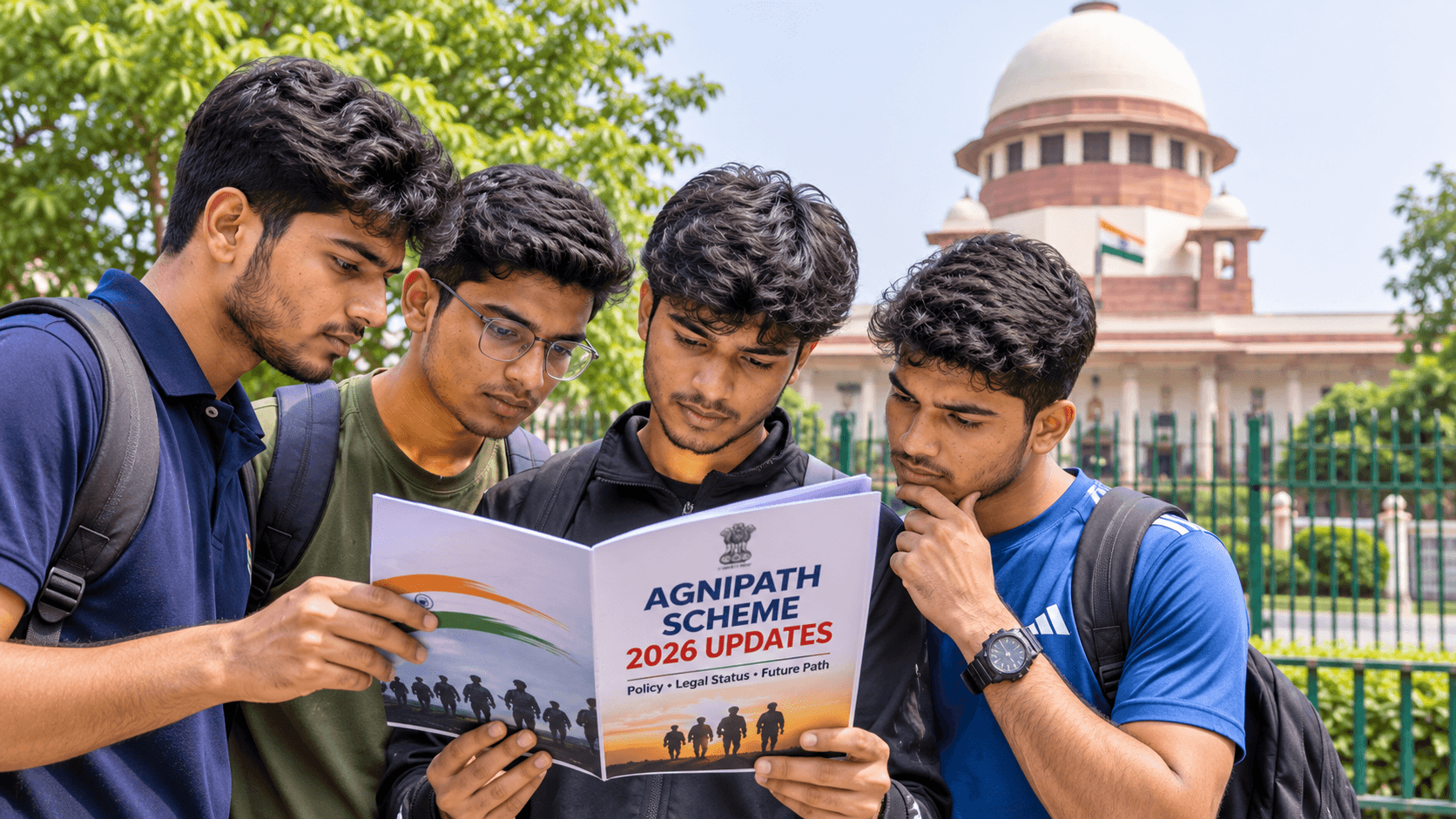
If you are an Agniveer, a defence aspirant, or a parent following India's military recruitment policy, the Agnipath scheme has likely affected your plans. On 4 November 2026, the Union Cabinet approved a significant revision. Most Agniveers will now be offered a two-year extension, and a pathway toward regular service opens after six years. This article explains the original scheme, the legal challenges it faced, the Supreme Court's position, the 2026 revision, and the career options for those who leave the forces.
Introduction
When the Government of India announced the Agnipath scheme in June 2022, it marked the largest change to military recruitment since Independence. The scheme replaced long-term service with a fixed four-year engagement for recruits, who were called Agniveers. The announcement triggered protests across the country.
Many protesters had already cleared physical and medical tests under earlier recruitment rallies, some of which were paused during the COVID-19 pandemic. For them, the change felt like the loss of an opportunity they had already earned. That disappointment soon moved from the streets to the courts.
The legal questions were significant. Courts had to decide whether candidates from an earlier recruitment process had any enforceable right to appointment, whether a separate class of contractual soldiers violated the constitutional guarantee of equality, and how much scrutiny executive decisions on national defence should receive. The Supreme Court ultimately declined to interfere with the scheme. The government has since revised it in response to operational needs, public feedback, and questions about the future of exiting recruits.
Part 1: The Original Agnipath Framework (2022)
The Union Government introduced the scheme through executive action to recruit Personnel Below Officer Rank (PBOR) for the Army, Navy, and Air Force. Its main features were:
- Tenure: Recruits served for an initial period of four years.
- Retention: Up to 25% of each batch could be enrolled in the regular cadre, based on merit.
- Exit: The remaining 75% were discharged with a tax-free "Seva Nidhi" package, without regular pension or gratuity.
The government presented the scheme as a way to build a younger, more adaptable force and to ease long-term pension liabilities. Critics argued that a four-year tenure left most young people without a clear career path at around age 21.
Part 2: The 2026 Revision (The 4+2 Model)
On 4 November 2026, the Union Cabinet approved revisions to the scheme. The Chief of Defence Staff, General N.S. Raja Subramani, announced the changes at a press briefing. According to the government and news reports, the revised framework works as follows:
- First four years: The top 25% of each batch continue to be absorbed into the regular cadre based on internal merit.
- Two-year extension: The remaining 75% are offered an additional two years of engagement, so their total service can extend to six years.
- Pathway to regular service: After six years, these Agniveers may be considered for enrolment as regular soldiers, depending on their willingness and military criteria.
- Exit benefits: Reports indicate that the government's contribution to the Seva Nidhi package has been increased for those who leave after six years. The exact figure should be confirmed from the official notification.
Defence officials have clarified that the revision does not mean the scheme has been rolled back. Instead, it modifies the structure to address concerns about career continuity. Some commentators have welcomed the change as a meaningful correction. Others have questioned whether it adequately addresses job security, military experience, and unit cohesion. Both views are part of the public debate, and readers should follow the official notifications for the final position.
For the full text of the constitutional provisions discussed below, readers can consult the Legislative Department of the Government of India, and for Acts such as the Army Act, the India Code portal.
Part 3: The Legal Challenges
Several High Courts received petitions challenging the scheme. These cases were later transferred to the Delhi High Court. The petitioners relied on three main constitutional and legal arguments.
3.1 Legitimate Expectation and Promissory Estoppel
Many petitioners had cleared physical and medical examinations under the earlier recruitment process. They argued that the government had made an implicit promise to complete that process, and that changing course was unfair.
The doctrine of legitimate expectation holds that a person may have a reasonable expectation of particular treatment based on a government promise or established practice. Promissory estoppel prevents the government from going back on a clear promise when someone has relied on it to their detriment.
The Delhi High Court rejected these arguments. It held that participating in a selection process does not create an indefeasible legal right to appointment. Where a bona fide public policy decision serves the national interest, private expectations must give way. The Court also observed that promissory estoppel has limited application when the government acts in the public interest.
3.2 Article 14: The Right to Equality
Petitioners argued that Agniveers and regular soldiers perform similar duties but receive different pay, tenure, and benefits. They claimed this amounted to unequal treatment of equals, in violation of Article 14 of the Constitution.
The courts took a different view. Article 14 does not prohibit all differences in treatment. It permits reasonable classification, meaning the State may treat groups differently if the classification has a rational basis and is connected to the purpose of the law. The courts accepted that Agniveers form a distinct class with different service terms, and that this distinction is linked to the policy's objectives.
3.3 Arbitrariness and Due Process
The third argument was that the scheme was introduced arbitrarily, without sufficient parliamentary debate, and that it jeopardised the futures of young people and national security.
The Delhi High Court responded that the scheme was framed by military experts. Judges, it noted, lack the specialised knowledge needed to second-guess military strategy and personnel planning. Courts generally show considerable restraint when reviewing executive decisions linked to national defence, unless those decisions are clearly arbitrary or unconstitutional.
Part 4: The Judicial Verdict
The Delhi High Court (February 2023)
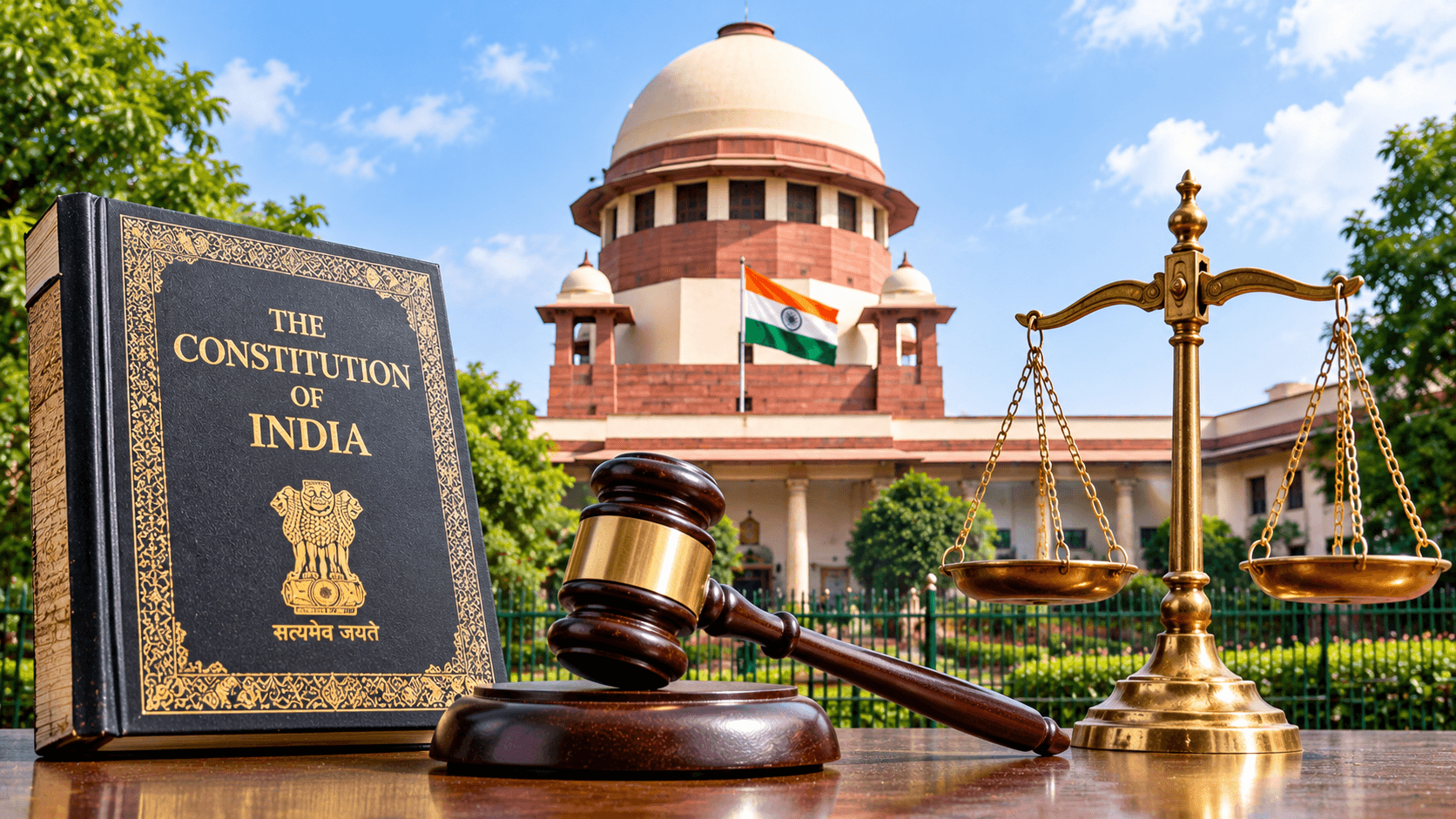
A Division Bench of the Delhi High Court dismissed a group of more than 20 petitions. In Prashant Singh v. Union of India & Ors., decided on 27 February 2023, the Court upheld the scheme on the grounds outlined above. Judgments of the court are available through the Delhi High Court's official website.
The Supreme Court
The Supreme Court subsequently declined to interfere with the Delhi High Court's ruling. Readers should check the official order for the exact date and bench composition, which are available on the Supreme Court of India's official portal. The principles established matter most for the public:
- The State may halt or modify a recruitment process where a bona fide public policy shift is justified.
- Promissory estoppel and legitimate expectation cannot easily be used to compel the government to complete an earlier recruitment process.
- Courts will not substitute their judgment for that of the government on defence policy, unless the decision is arbitrary or unconstitutional.
Part 5: What the 2026 Changes Mean for Different Groups
Candidates from the Pre-2022 Recruitment Process
The Supreme Court's ruling means candidates who cleared tests under the earlier process cannot demand appointment under that framework through the courts. The 2026 revision does not reopen that process. Such candidates should monitor current notifications from the Ministry of Defence and the Indian Army recruitment portal, rather than relying on past selection results.
Current and Future Agniveers
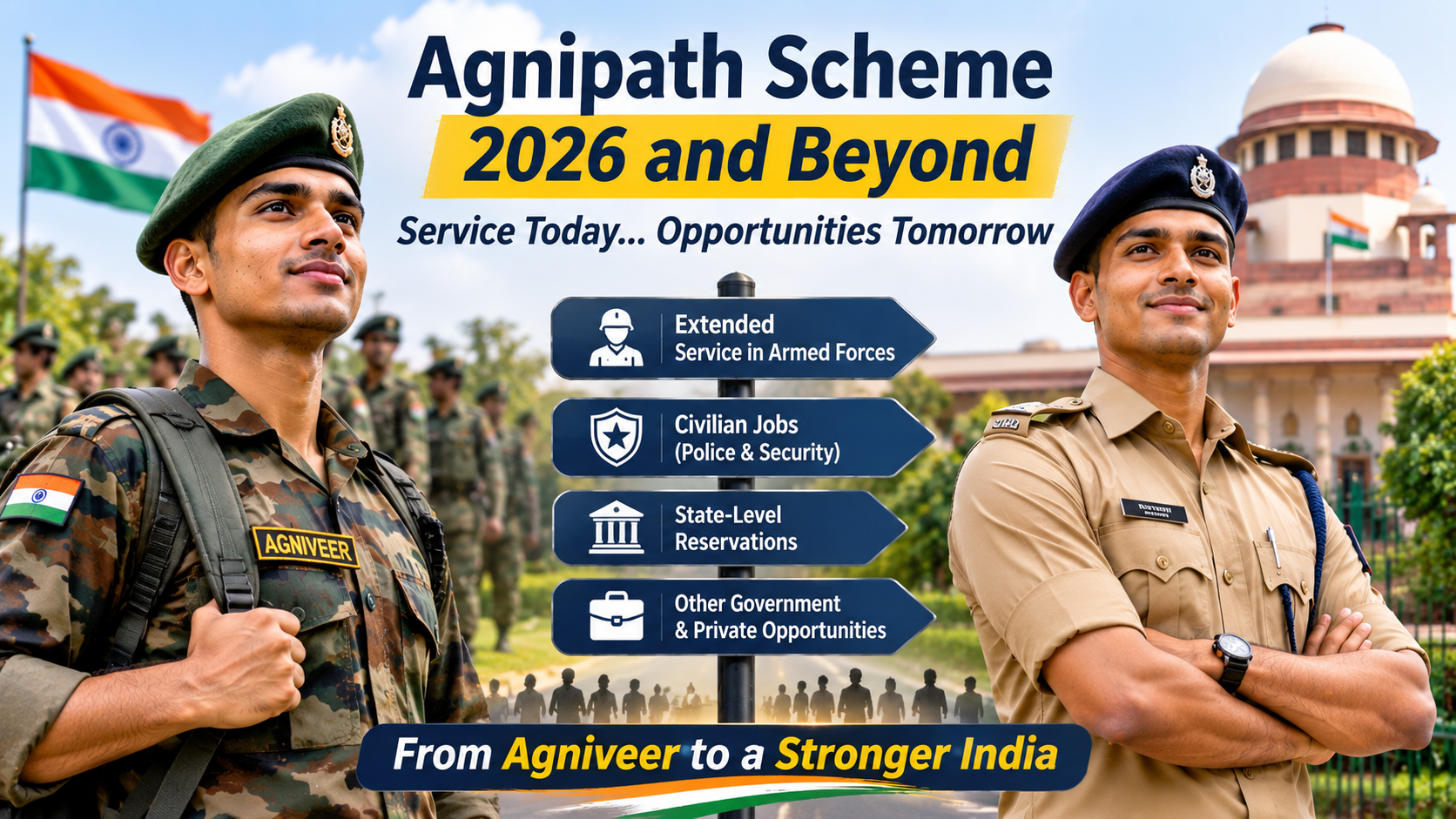
The most important practical change is that Agniveers now have a defined route to serve beyond four years and to be considered for regular service after six. Under the original scheme, most recruits had to leave at about age 21 without a clear next step. The new framework does not guarantee permanent employment, since enrolment remains subject to willingness and military criteria. However, it gives many recruits an opportunity they did not previously have.
Dispute Resolution
Agniveers are subject to military law, including the Army Act, the Navy Act, and the Air Force Act. Service-related grievances arising during their tenure fall under the jurisdiction of the Armed Forces Tribunal (AFT), not ordinary civilian courts. Anyone facing such a dispute should understand the AFT process, including filing procedures and time limits. The official AFT website is aft.gov.in.
Part 6: Career Options for Agniveers Who Exit
For Agniveers who do not enter the regular cadre, several forms of support are available or have been announced.
Financial Support: Seva Nidhi
The Seva Nidhi package is tax-free and is designed to provide a financial cushion as recruits move to civilian life. Reports indicate that the government's contribution has increased under the 2026 rules. Confirm the exact percentage from the official notification before relying on it in financial planning.
Central Government Jobs
The government has announced a 10% horizontal reservation for ex-Agniveers in the Central Armed Police Forces (BSF, CRPF, CISF, ITBP, and SSB) and the Assam Rifles. Horizontal reservation applies across categories rather than being limited to one. Official notifications are published by the Ministry of Home Affairs.
State Government Jobs
Several states have announced priority or reserved positions for ex-Agniveers in State Police, the Provincial Armed Constabulary (PAC), and other departments. These include Uttar Pradesh, Haryana, Madhya Pradesh, and Uttarakhand. Reports indicate that Haryana has raised its reservation for ex-Agniveers to 20%. Details differ from state to state and can change, so check the latest notifications from the relevant state government and recruitment body.
A Note on Implementation
Reservations are effective only when they are implemented. Candidates should expect the usual recruitment process, which includes eligibility checks, examinations, and medical standards. Quotas reduce competition, but they do not remove the need to qualify. Official announcements from the government are published by the Press Information Bureau (PIB).
Part 7: Critical Analysis
Strengths of the revised model: The 2026 changes respond to the most common criticism of the 2022 scheme, namely that recruits were left without a career path at a young age. A six-year pathway, with a possible route to regular service, gives recruits more time and more options. Central and state quotas provide a practical safety net.
Remaining concerns: Critics argue that a largely contractual force may affect experience levels, continuity, and cohesion in units. Questions also remain about how many Agniveers will ultimately be absorbed, and whether benefits will be uniform across states and services.
The implementation test: The success of the scheme will depend on whether reservations are applied smoothly. The CAPF quota and state police quotas will be tested over the coming years. Their real value will depend on the number of posts, the timing of recruitment, and how easily ex-Agniveers can apply.
Conclusion
The judicial validation of the Agnipath scheme reinforces an important constitutional principle: courts exercise considerable restraint when reviewing executive policies connected to national defence. By declining to interfere, the courts allowed the government to learn from its experience and revise the policy, which it has now done through the 4+2 model.
For young people considering a career in the armed forces, the picture is clearer than it was in 2022. The revised framework offers longer engagement, a possible route to regular service, improved financial support, and reserved opportunities in central and state forces. Whether the scheme meets its goals will depend on implementation, and every candidate should read official notifications carefully before making decisions.
Frequently Asked Questions
1. What are the major changes to the Agnipath scheme in 2026?
On 4 November 2026, the Union Cabinet approved a two-year extension for the 75% of Agniveers who are not absorbed into the regular cadre after four years. After six years, they may be considered for regular enrolment, depending on willingness and military criteria.
2. Can candidates from pre-2022 recruitment rallies still file cases demanding appointment?
The Supreme Court has declined to revive such claims. Clearing physical and medical tests does not create an absolute legal right to appointment when the recruitment framework has been replaced by a valid policy.
3. Does the Agnipath scheme violate Article 14?
The courts have held that it does not. Article 14 permits reasonable classification, and the courts accepted that Agniveers form a distinct class with different terms of service.
4. What happens to Agniveers who do not enter the regular army after six years?
They may receive the Seva Nidhi package. They are also eligible for a 10% horizontal reservation in CAPFs and the Assam Rifles, and several states have announced priority or reserved positions in police and government departments.
5. Can an Agniveer approach a civilian High Court for a service dispute?
Generally, no. Agniveers are subject to military law, and service-related disputes are adjudicated by the Armed Forces Tribunal.