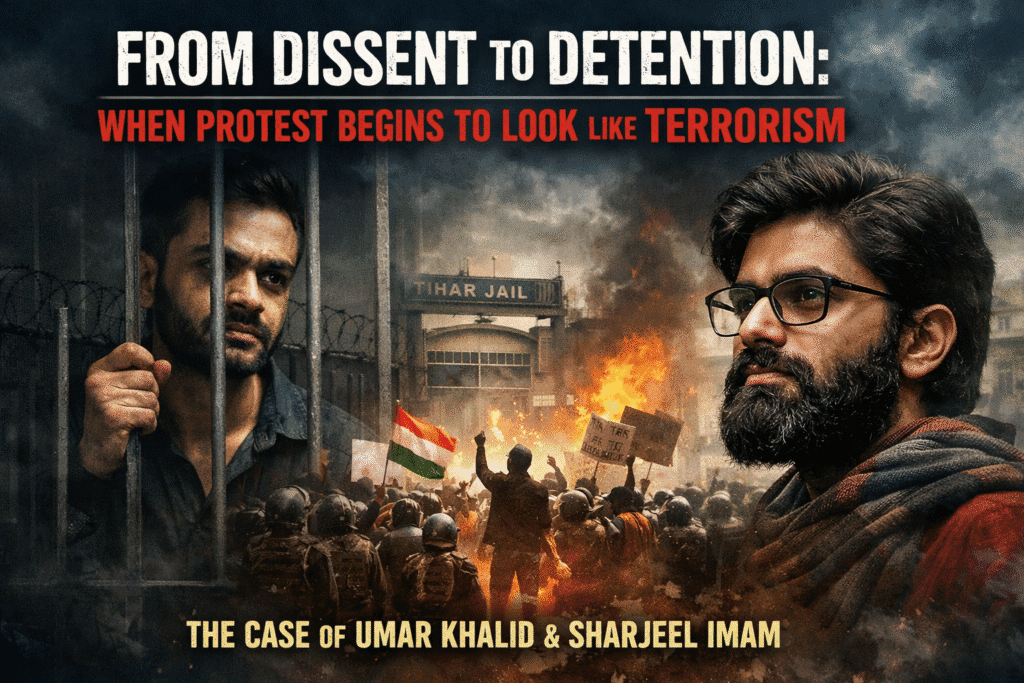
 FROM DISSENT TO DETENTION: WHEN PROTEST BEGINS TO LOOK LIKE TERRORISM
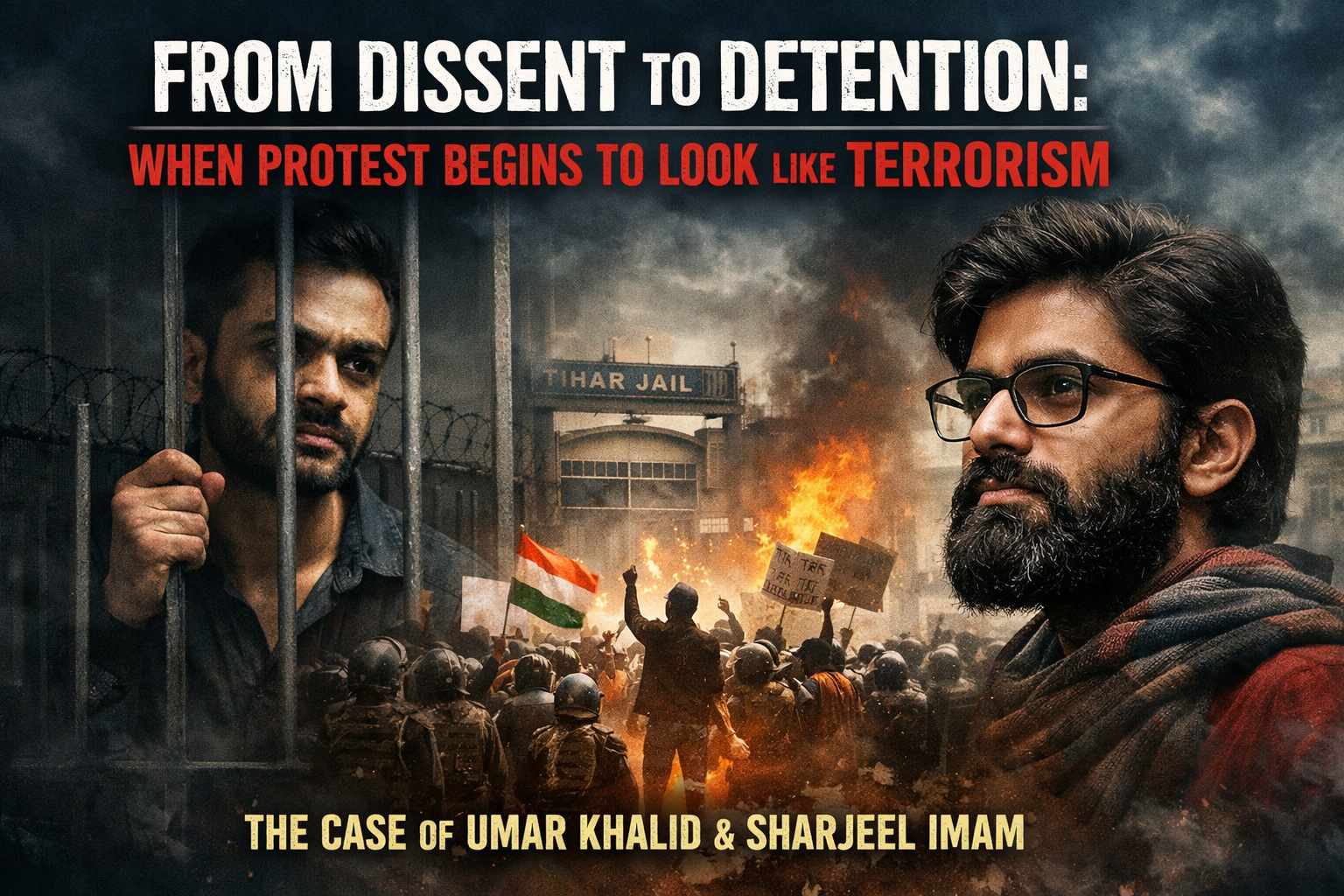 FROM DISSENT TO DETENTION: WHEN PROTEST BEGINS TO LOOK LIKE TERRORISM
By Adv. Mamta Singh Shukla, Supreme Court of India
January 8, 2026 | New Delhi
Introduction: A Quiet Question for Our Democracy:-
Imagine a group of students gathering peacefully to protest a government policy. There are no weapons, no calls for violence—only a temporary road blockade to make their voices heard. Now imagine being arrested for that protest, branded a “terrorist,” and spending more than five years in prison without trial or even a chargesheet. This is not fiction. This is the reality faced by Umar Khalid and Sharjeel Imam.
On January 5, 2026, the Supreme Court denied bail to both Umar Khalid and Sharjeel Imam, holding that planning a “chakka jam” could amount to a terrorist act under the Unlawful Activities (Prevention) Act (UAPA). This decision forces us to confront a difficult question: Has peaceful protest begun to resemble terrorism in the eyes of the law?
Umar Khalid and Sharjeel Imam is a former JNU student who participated in several anti-CAA protests in late 2019. Their speeches called for peaceful, time-bound road blockades as a form of democratic resistance. There was no incitement to violence—only an attempt to draw attention to a controversial policy through civil disobedience – a popular tool used by Mahatma Gandhi during freedom movement.
Timeline: How Events Unfolded:-
December 2019 – The Beginning
Umar Khalid spoke at multiple protests against the Citizenship Amendment Act (CAA). He encouraged symbolic road blockades to pressure the government, emphasising peaceful methods.
January–February 2020 – Protests Spread
Across India, sit-ins and demonstrations grew. Road blockades became a common protest tool.
February 2020 – Delhi Riots
Communal riots erupted in Northeast Delhi, resulting in tragic loss of life. Umar Khalid and Sharjeel Imam were not present during the violence. Yet, police later alleged that the protests had “created conditions” for unrest.
September 2020 – Arrest Under UAPA
Umar Khalid and Sharjeel Imam were arrested and charged under anti-terror provisions, accused of conspiring to incite riots through protest planning.
2020–2025 – Years of Uncertainty
For five years, no chargesheet was filed. Multiple bail applications were rejected. The case moved slowly, and no trial began.
January 2026 – Supreme Court Verdict
The Court denied bail, stating that five years of detention without trial was not unconstitutional. Umar Khalid and Sharjeel Imam remains in Tihar Jail.
How the Law Has Changed:-
Traditionally, terrorism referred to violent acts involving weapons, explosives, or direct attacks on civilians. However, the Supreme Court has now expanded this definition to include “any other means” such as sustained road blockades that disrupt public services.
This interpretation quietly shifts protest strategies into the realm of terror law. If blocking roads is terrorism, then what about farmers’ protests, labour strikes, or student demonstrations? Even historical movements like Gandhi’s Salt March could fall under suspicion.
The Bail Problem Under UAPA:-
UAPA makes bail extremely difficult. If the prosecution shows a “prima facie” case—a very low standard—bail is automatically denied. This reverses the presumption of innocence. Allegations alone become enough to keep someone behind bars for years.
Ironically, the Supreme Court itself has previously ruled that long detention without trial favours bail and that bail should remain the rule, not the exception. Yet those principles were not applied here.
How Other Democracies Would Respond:-
United States
Bail is the default. The government must prove danger with strong evidence. Speedy trials are strictly enforced.
United Kingdom
Terror laws require actual violence. Peaceful civil disobedience remains protected.
Canada
Indefinite detention without trial violates constitutional rights. Terror intent must be strictly proven.
International Law Perspective:-
United Nations experts have repeatedly warned that overbroad terror laws violate human rights. Global standards demand strong evidence, proportionality, and protection of peaceful assembly. Prolonged detention without trial goes against international principles of justice.
Why This Judgment Matters:-
This ruling has far-reaching consequences:
- It discourages citizens from protesting.
- It disproportionately affects minorities and dissenters.
- It weakens the presumption of innocence.
- It allows endless detention without trial.
- It sets a dangerous legal precedent.
Remaining Options:-
The legal options are now limited to review petitions, constitutional challenges, and international advocacy. However, the precedent remains in place, shaping future cases.

Conclusion: Protecting the Right to Dissent:-
Umar Khalid and Sharjeel Imam are organised students. They did not carry weapons. They did not incite violence. Yet both have lost five years of his life behind bars.
This is not just about one person. It is about every citizen’s right to dissent. A true democracy does not fear protest—it listens to it. When we stop protecting dissent, we stop protecting democracy itself.
Protest is not a crime.
It is a constitutional right.
SOURCES:
Supreme Court denies bail to Umar Khalid, Sharjeel Imam – Times of India
https://timesofindia.indiatimes.com/india/suprme-court-denies-umar-khalid-sharjeel-imam-bail-allows-it-for-five-co-accused/articleshow/126363870.cmsWhy Supreme Court denied bail to Umar Khalid and Sharjeel Imam – Indian Express
https://indianexpress.com/article/explained/explained-law/delhi-riots-case-bail-umar-khalid-sharjeel-imam-10457036/SC judgment in Umar Khalid case a disturbing precedent – LiveLaw
https://www.livelaw.in/articles/supreme-courts-judgment-in-umar-khalid-case-is-a-disturbing-precedent-517149India’s top court rejects bail for long-held student activists – AP News
https://apnews.com/article/51c3925ad9bf6b881857c8330210fa79How Supreme Court broadened the meaning of “terrorist act” under UAPA – Vajiram & Ravi
https://vajiramandravi.com/current-affairs/how-the-supreme-court-broadened-the-meaning-of-terrorist-act-under-uapa/
About the Author
Support Vijay Foundation
If you value independent analysis and public-interest work on technology and privacy, consider supporting our mission.