
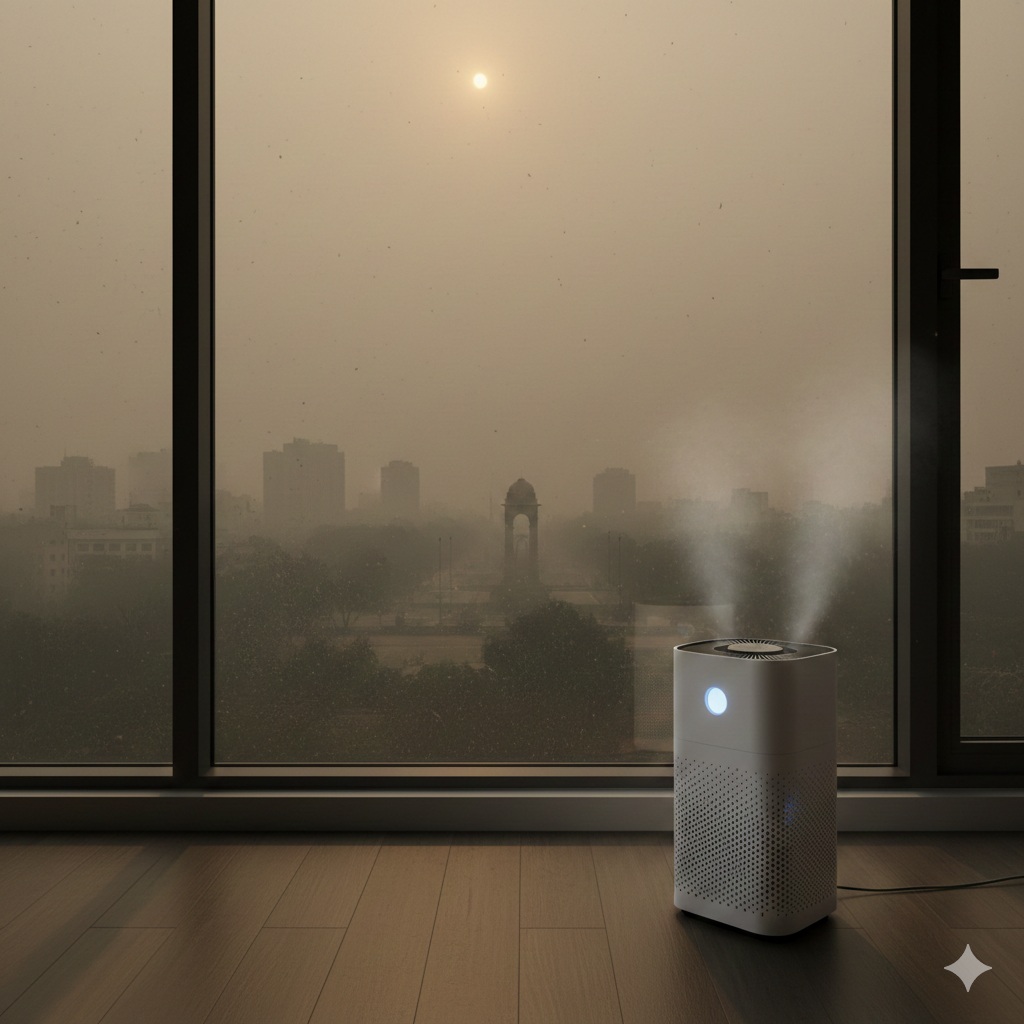
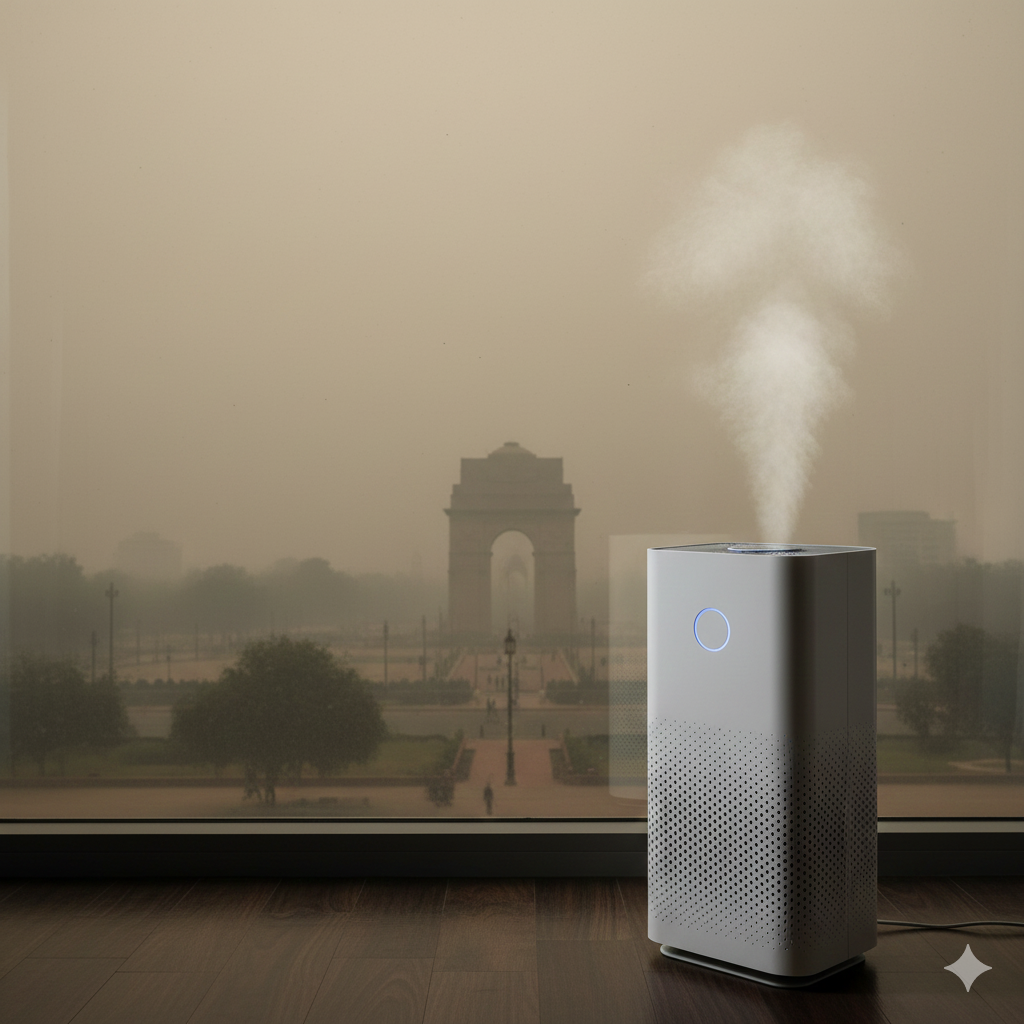
Is India Taxing the Right to Breathe? Delhi High Court Questions 18% GST on Air Purifiers
As air pollution reaches emergency levels, the Delhi High Court questions whether taxing air purifiers violates the fundamental right to life under Article 21.
Disclaimer: Sub judice as on December 24, 2025. This article is based on public filings, court observations, and reported hearings.
Delhi High Court Calls Air Pollution an “Emergency”
As Delhi’s air pollution touched emergency levels in December 2025, the Delhi High Court made a striking observation:
“Either provide clean air or reduce GST.”
This remark was made during the hearing of the Kapil Madan Public Interest Litigation (PIL), which challenges the imposition of 18% GST on air purifiers. The court’s observation has reignited a crucial constitutional debate:
Can the State tax survival tools when clean air itself has become unavailable?
In cities like Delhi, NCR, and other urban centres, air purifiers are no longer lifestyle products. They have become indispensable for survival.
Is Clean Air a Fundamental Right Under Article 21?
The constitutional foundation of the Kapil Madan PIL lies in the Supreme Court’s landmark environmental jurisprudence, particularly M.C. Mehta v. Union of India, including the Vehicular Pollution Case.
The Supreme Court categorically held:
“The right to life under Article 21 includes the right to enjoyment of pollution-free water and air for full enjoyment of life.”
This pronouncement imposed affirmative obligations on the State to:
prevent environmental degradation,
regulate polluting activities, and
ensure citizens are not forced to trade health for survival.
Clean air is therefore not a policy choice.
It is a constitutionally guaranteed right.
Why GST on Air Purifiers Raises Constitutional Concerns
When the State fails to ensure breathable outdoor air, citizens are compelled to protect themselves indoors. In such circumstances, taxing air purifiers at 18% GST creates a direct conflict with Article 21.
The constitutional logic is straightforward:
If the State cannot provide clean air outdoors, it cannot penalise citizens for securing it indoors.
By categorising air purifiers as “luxury goods,” the State effectively converts a fundamental right into a market commodity — accessible only to those who can afford the added fiscal burden.
The Affordability Argument — Why It Fails Constitutionally
A commonly advanced policy argument is:
“If a person can afford an air purifier costing ₹15,000–₹17,000, paying an additional ₹1,500–₹2,000 as GST should not matter.”
This reasoning is constitutionally flawed for several reasons.
1. Fundamental Rights Are Not Income-Based
The Constitution does not recognise rights only for those above an affordability threshold. Middle-class families often stretch their budgets to purchase air purifiers out of medical necessity, not surplus wealth.
2. The Cumulative Financial Burden
Households already facing:
medical expenses,
school fees,
rent,
rising food and fuel costs,
are not facing a marginal increase. An additional ₹1,800–₹2,000 becomes exclusionary, not incidental.
3. Public Health Is Not a Luxury Market
If this logic were accepted, essential goods such as vaccines, oxygen cylinders, masks, or life-saving medicines could be taxed heavily simply because some people can afford them.
This approach was decisively rejected during the COVID-19 pandemic, when essential medical goods were zero-rated or minimally taxed.
A right that is economically inaccessible is no right at all.
Can the State Profit From Environmental Failure?
The most compelling constitutional critique is this:
The State cannot monetise its failure to control pollution.
When outdoor air becomes hazardous due to:
regulatory lapses,
weak enforcement,
industrial non-compliance,
citizens are forced indoors for survival. Taxing the very tools that enable that survival amounts to a constitutional inversion.
Such taxation directly violates:
Article 21 – Right to Life
Article 14 – Equality (clean air becomes class-based)
Article 47 – Directive Principle mandating improvement of public health
Clean Air as a Right, Not a Luxury
The jurisprudence of M.C. Mehta v. Union of India leaves no ambiguity:
Clean air is not a concession — it is a constitutional guarantee.
India’s current GST regime treats breathing as a consumer choice rather than a human necessity. The Kapil Madan PIL, reinforced by the Delhi High Court’s recent intervention, presents a historic opportunity for the judiciary to reaffirm that:
the right to breathe cannot depend on purchasing power,
fiscal policy must align with constitutional morality, and
environmental justice must extend beyond courtrooms into homes.
If this reasoning is accepted, it will mark a decisive shift —
from clean air as a privilege to clean air as an enforceable fundamental right.
Key Sources
[Moneycontrol: Centre Opposes PIL (Dec 25)](https://www.moneycontrol.com/news/india/centre-opposes-pil-in-delhi-high-court-seeking-lower-gst-on-air-purifiers-will-open-pand …)
About the Author
Support Vijay Foundation
If you value independent analysis and public-interest work on technology and privacy, consider supporting our mission.