
Data Dignity India: Why Privacy is Moving from “Optional” to “Absolute”
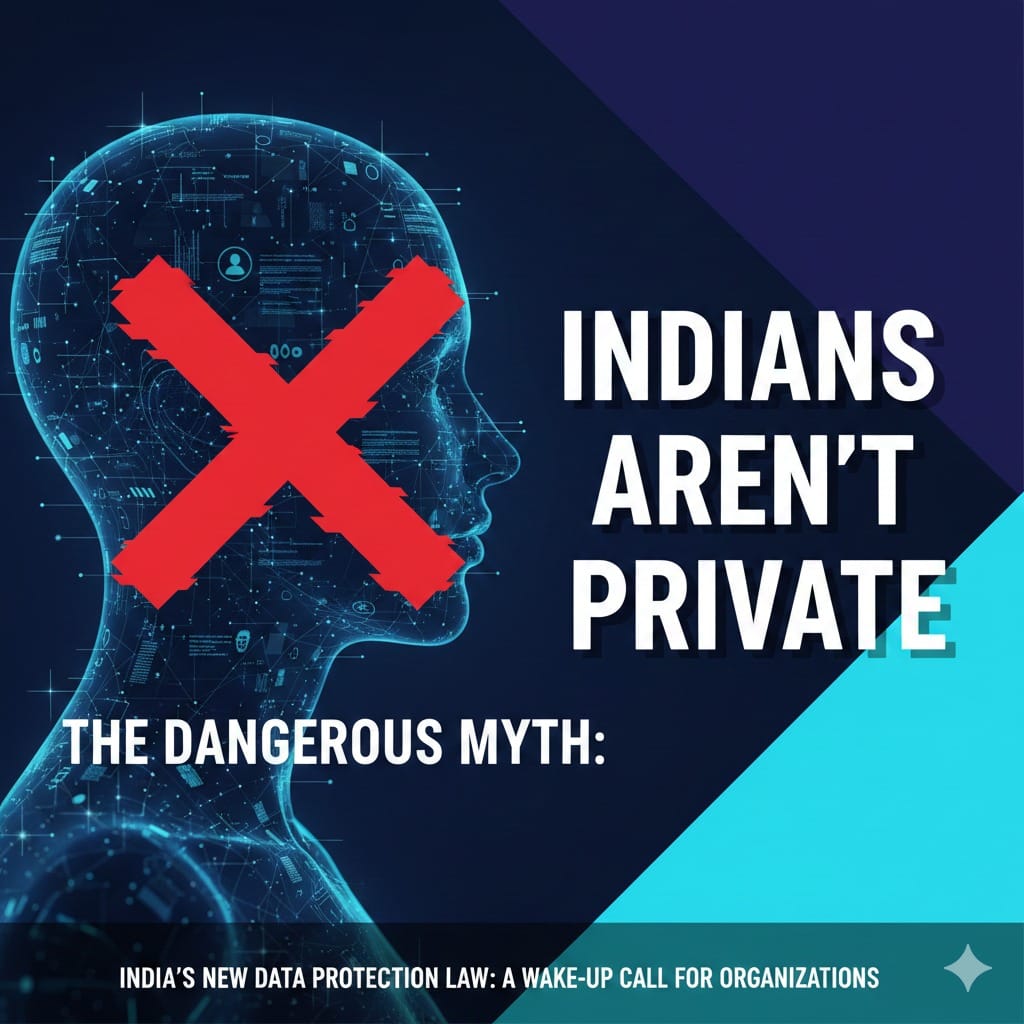
The shift from data exploitation to digital sovereignty under DPDP Rules 2025.
But as we navigate 2026, that era has officially ended. With the Digital Personal Data Protection (DPDP) Rules, 2025 now in full force, we are witnessing a fundamental shift in the social contract between the citizen and the corporation. Privacy is no longer a corporate “add-on”; it has evolved into Data Dignity India.
What is Data Dignity India?
Data Dignity is the philosophy that an individual’s data is not just a commodity to be exploited, but an extension of their personhood. In the Indian context, this has transitioned from a theoretical judicial concept into an absolute legal mandate. This shift is driven by core pillars that have redefined our digital economy:
1. The Death of the “Trade-off” Fallacy
Previously, the prevailing narrative was that privacy and innovation were at odds. You could have “free” UPI payments and social media, or you could have privacy—but not both. The DPDP Act 2023 and its subsequent Rules have shattered this. By mandating “Privacy by Design,” the law forces organizations to innovate within the boundaries of Data Dignity India.
- The Reality: A 2025 EY survey revealed that nearly 75% of Indian consumers would stop purchasing from a brand they do not trust with their data. Trust is now the primary currency.
2. From “Consent” to “Agency”
Under the new rules, consent is no longer a blanket “yes” buried in 50 pages of legalese. It must be itemized, specific, and withdrawable.
- Consent Managers: The introduction of Consent Managers allows citizens to manage and revoke their data permissions across multiple apps from a single dashboard. These entities are neutral, accountable intermediaries that exemplify the spirit of Data Dignity India.
- The Right to Erasure: Section 12 is now an absolute. If a user withdraws consent, the Data Fiduciary must ensure the data is scrubbed across their entire ecosystem, including third-party processors.
3. Judicial Weight: Identity as Property
Rulings on Personality Rights were the early tremors of this shift. The courts have paved the way by treating an individual’s voice, image, and digital persona as protectable property. Using an Indian citizen’s data to train a Large Language Model (LLM) without explicit consent is now viewed as an infringement on their Data Dignity India.
Impact on Startups and MSMEs
For the first time, Data Dignity India is a board-level priority for small businesses. While the 2025 Rules provide some reliefs for “notified startups”—such as longer timelines for grievance redressal—the core obligations remain non-negotiable.
Startups must now implement “Privacy by Design” from day one. Investors are increasingly conducting “data audits” during due diligence. A startup that cannot demonstrate a clean consent log or a robust data-deletion protocol is now seen as a high-risk liability. In 2026, Data Dignity India is not just a legal requirement but a prerequisite for venture capital.
Cross-Border Data Transfers: The New Reality
The DPDP Rules 2025 have introduced a “Blacklist” approach to data transfers. While data can flow to most countries, the Central Government retains the power to restrict transfers to specific “untrusted” territories. This necessitates that global SaaS companies and multinationals maintain Data Dignity India standards regardless of where their servers are located. Companies are now adopting “migration-ready” cloud architectures to ensure that Indian user data remains protected under sovereign standards, even when processed offshore.
The Cost of Ignoring the Shift
Organizations that still view privacy as “optional” are facing a “triple threat” in 2026:
- ■ Financial Ruin: Penalties of up to ₹250 crore per breach.
- ■ Digital Ostracization: Non-compliant apps will be blocked by users through Consent Managers.
- ■ The Trust Deficit: In a competitive market, Data Dignity India has become a premium brand attribute.
The Path Forward: Building for Dignity
To move from “Optional” to “Absolute,” organizations must audit their internal cultures. This means:
- Data Minimization: Only collect what is strictly necessary for the service.
- Transparent Breach Notifications: Silence during a breach is now legally and reputationally fatal.
- Empowering the DPO: The Data Protection Officer (DPO) must have a seat at the executive table. Learn more on our About Us page.
Final Thought
Data Dignity India is about more than just legal compliance; it is about respecting the human being behind every byte of data. As India cements its place as a global leader, our legacy won’t be the volume of our data, but the sovereignty we grant to the individuals who create it.
Share This Investigation
Help us spread awareness about critical digital rights and legal updates.