IDENTITY CRISIS AND SELF-DISCOVERY IN TEENAGERS

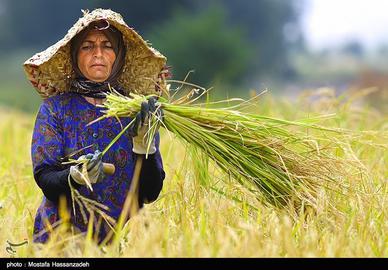
IDENTITY CRISIS AND SELF-DISCOVERY IN TEENAGERS Most sensitive phase of human beings is adolescence. It is a phase of life when a child steps out of the innocence of childhood and moves into youth.  This is a phase of life where not only there are bodily changes but a deep transformation into ones thought, behavior and emotions. This period is characterized by a mix of excitement and confusion. This period of transition is also crucial for shaping who a person becomes. Though physical changes are often visible but it is difficult to determine the mental changes. Brain Development: The Brain undergoes a massive reorganization therefore there is a greater tendency towards risk taking and strong emotions. Identity Formation:  Teenagers began to question themselves – “Who am I ?’’, “Where do I fit in?”, “What is my true identity?”, “How do people see me, and how do I see myself?”. Social Relationships: The focus often shifts from family to friends. Peer relationships become incredibly important and can have a significant influence on teen’s choices and self-esteem.   Emotional Intensity: Emotions can be more intense and sometimes overwhelming. Teens are navigating new feelings and learning to manage them in healthy ways. Because of these changes  adolescence can be challenging both for the teens and their families. This search and confusion are what we call an Identity Crisis. But if teenagers receive proper guidance and support this can become the most beautiful opportunity for self-discovering and self-growth. Symptoms of Identity Crisis There is a core struggle in a teenager who is searching for their place in the world which is often manifested as a combination of internal confusion and external behavior changes. Lack of Self Confidence and Trust:  Teens often doubt their own abilities, judgements and decision. This is often rooted in their own value system and principles. Constant Comparison with Others:  When Social comparisons become excessive a deep sense of insecurity about their own worth crops up. At times they may feel that they are lagging behind their peers or they are not up to the mark of the idealized lives they see online. Dissatisfaction with Self: As a result of constant comparison and self-doubt they are always unhappy and do no feel good enough leading to a state of mental turmoil. Isolation: The confusion and unhappiness cause a teenager to withdrawal from others. This Social withdrawal is a defence mechanism to avoid judgement. Frequent changes in thoughts and interests:  A teen may try on different interests, styles, friend groups trying to find out what fits him. This may be a natural part of exploration but can become a source of  irritability. Self-Discovery The greatest solution to this confusion is self-discovery which gives an opportunity to know the truth about themselves.          Help recognize strength and weaknesses.          Define values and beliefs.          Gives confidence to choose right career and relationships.          Strengthens mental health enabling to face life challenges with ease. Practical Steps for Self-Discovery          Spend 10 minutes daily writing your thoughts and feelings to understand oneself better.          Identify your interests what gives most joy and satisfaction.          Surround yourself with people who inspire and encourage.          Sets small goals to achieve big.          Don’t hesitate to seek help. It requires lot of patience and honesty. Role of Parents and Teachers           Need to be heard patiently.          Their emotions need to be accepted.          Never compare with others.          Give opportunity to make their own decisions. Mistakes will happen but not without giving bigger lessons in life. Conclusion: Discovery self-identity is a process and the journey may take substantial time to be achieved. If teenagers are given proper support, open communication and develop self-awareness this will become an opportunity for self-development. Therefore, identity crisis is not an end but a beginning of self-discovery and self-growth. Adv. Mamta Singh ShuklaSupreme Court of IndiaMob. No. – 9560044035

Why your Bottle costs Rs. 100/- Beyond the Menu ?

The National Restaurant Association of India (NRAI) and the Federation of Hotels and Restaurant Association of India (FHRAI) in a legal battle over restaurant service charges issue came up when Central Consumer Protection Authority (CCPA) issued guidelines in 2022 to prevent hotels and restaurants from automatically adding a service charge to protect the consumer from what may be considered unfair trade practice. The ongoing legal proceedings, including a recent hearing at the Delhi High Court, highlighted a fundamental conflict between a consumer’s right to transparent pricing and a business’s right to set its own charges for the dining experience. The Court’s critical stance on what it calls “Double Charging” – once through inflated prices and again through service charge – underscores the complexity of this issue and its potential to reshape the restaurant industry’s business model. Main Arguments of the Bench A restaurant selling a water bottle with a price of  ₹ 20/- Maximum Retail Price (MRP) for ₹ 100/- is already charging a premium for the ambience and dining experience. This ₹ 80/- markup, the court argues already covers the costs of the staff, the air conditioning, the seating, and the overall atmosphere. A separate service charge, which is also for “the same service rendered,” is therefore considered unjustified and an unfair trade practice. The guidelines issued by Central Consumer Protection Authority (CCPA) states that a service charge cannot be added automatically to a food bill and must be voluntary. The Court is of the view that this practice violates the spirit of consumer protection by being deceptive and forcing the consumer to pay twice for the same “service.” The Court also raised a crucial question about the legality of charging GST on a service charge which further complicates the issue. Main Argument of Restaurant Associations Conclusion –  The Judgement bill likely redefined the relationships between the restaurants and their patrons, ensuring greater clarity on billing and strengthening the consumer’s position in an industry where pricing has often a point of confusion. The outcome of this case could set a significant precedent, potentially forcing restaurants to either absorb the cost of “ambience” into their menu prices or make the service charge truly voluntary and transparent. Advocate Mamta Singh Shukla                                                                                    Supreme Court of India  Mob. No. –  9560044035 

Catch 22 Situation : The Struggle of Disabled Cadets

An injury or illness during military training is a life altering event. While most people associate military disability with veterans who have served in the military for years. But a different and often most precarious struggle exist for those who suffered debilitating injury before they are formally commissioned. These cadets, who have dedicated years of there lives to rigorous physical and academic preparation, find themselves in a unique and difficult position. They are often stuck in a bureaucratic and legal limbo that lives them without the institutional and financial support afforded to their veteran counter-parts. No Legal Status: A key struggle for these cadets is their lack of legal status as a “Service Member.” In some countries they are not considered veterans or active-duty personnel. This distinction can be devastating, as it often means that they are ineligible for many of the benefits that would otherwise provide a crucial safety. Psychological Impact: The psychological impact is profound. A cadet’s career is not just a job; it is a vocation. Losing that future due to an injury can led to several mental health issues, as they not only lose their physical capabilities but also their identity and a future, they had worked so hard to achieve. Financial and Medical Struggles: These cadetsface a lack of opportunities for rehabilitation and future employment as they are not considered ex-servicemen, they are ineligible of the schemes designed to help disable veterans reintegrate into civilian life or to find alternative roles within the defence service. Ex-servicemen are covered under ECHS Scheme (Ex-servicemen Contributory Health Scheme) but medically discharged cadets are not eligible for free treatment at military hospital. While some may receive ex-gratia payment which is often a fraction of what they need to cover mounting medical bills leading to financial distress. Social Challenges: They face the social stigma and personal disappointment of not being able to complete their training, despite the sacrifices they have made. Lack of Rehabilitation and Alternative Employment: These cadets are left to fend for themselves with no systematic plan to help them transition into civilian life or to utilise their skills and training in different capacities. Status in Different Countries: In United States ROTC (Reserved Officers’ Training Corps) enrolled cadets are eligible for compensation through the department of Veterans Affairs and the Department of Labour. However, they are only entitled to certain benefits and medical coverage for their training related injuries. In United Kingdom the exact status of a pre-commissioned cadet is important, the UK’s Armed Forces Compensation Scheme (AFCS) is designed to compensate for injuries, illness or death caused by military service. In Canada there is a robust system of providing benefits for its service members which extent to cadets who are injured during their training. Canadian Armed Forces (CAF) may provide medical reimbursement for expenses not covered by provincial health care such as ambulance fees, physiotherapy, etc. Supreme Court Takes Suo-moto Notice: The issue of inadequate care for disable cadets has recently gained global attention. Justice B. V. Nagarthna of the Supreme Court of India took Suo-motu notice of a news report in the Indian Express titled “Mounting Medical Bills, nowhere to go: Braveheart Cadets Disabled in military training struggle in shadows” by Amrita Nayak Dutta on 12th August, 2025. The court’s intervention came after the report highlighted that around 500 officer cadets had been medically discharged since 1985 due to varying degrees of disability incurred during training. The Article pointed out that these individuals are not entitled to the status of Ex-Servicemen (ESM) which would grant them access to free medical care under the Ex-Servicemen Contributory Health Scheme (ECHS). Instead, they received a monthly ex-gratia payment of up to Rs. 40,000/- an amount that families say falls far short of there actual medical expenses which are much higher. Justice Nagarthna along with Justice R. Mahadevan initiated Suo-moto case and sought responses from Ministry of Defence, Ministry of Social Justice and Empowerment and the Armed Forces. The Bench questioned whether the government could implement scheme for these former cadets, such as a group medical insurance plan or one-time ex-gratia payment. The Court also inquired about the possibility of reassessing these individuals for rehabilitation into desk jobs or other roles within the Armed forces after their treatment. The court emphasised that this was an act of Social Justice and that cases should not be treated in an adversary manner. Conclusion:  By seeking a comprehensive response from the government and Armed Forces, the court has opened the door to potential services that go beyond the current insufficient ex-gratia payments. The courts suggestions show a commitment to finding a lasting and humane solution. This move not only offers a ray of light to the affected cadets and their families but also sends a clear message that the nation has a moral and legal obligation to care for those who are left vulnerable after making sacrifice for the country. The case will now be a crucial test of whether the government can work collaboratively with the Judiciary to create a more compassionate and equitable system for these “Braveheart Cadets.” Advocate Mamta Singh Shukla                                                                                     Supreme Court of India                                                                                                      Mob. No. – 9560044035

Delhi Restaurant’s Dress Code for Indian Attire

A couple in Delhi was allegedly denied entry into a restaurant as the women was wearing a Salwar-Kurta-an Indian Attire. This incident took place at a restaurant near Pitampura Metro station. This incident was shared online by the couple which went viral. The social reaction to this incident of a women denied entry into a restaurant as she was attired in a traditional Salwar-Kurta has been one of widespread outrage and debate. Outrage and Accusation of a Colonial Mindset: – The most common reaction was anger and frustration. People condemned the restaurant’s alleged policy calling it an insult to the Indian Culture. It primarily reflects a colonial hangover where western attire is viewed as modern and acceptable, while traditional Indian clothing is outdated or even inappropriate within the Jurisdiction of India. It was further alleged that people in ‘skimpier’ western clothes were allowed there. This fueled the sentiment of the people at large. Demand for Action: – This led to a huge public outcry thereby leading to quick and prompt action by the Delhi Chief Minister and other Government Officials who ordered a quick investigation calling the incident ‘unacceptable.’ This in turn led to the restaurant’s apology and a change in policy itself. Private vs Public Spaces: –   While majority condemned such an action by the restaurant while small but a vocal group defended the right of the establishment to have a dress code. This perspective raises a very pertinent question where the line is drawn between a private establishment’s right to set rules vs cultural and social discrimination. Public Shaming and Accountability: – This incident is a very clear example of the power of social media which was built due to immense public pressure, it held that the restaurant was accountable for such an act. The apology of the owner of the restaurant, the rescinding of the dress code and special discount offer for women in Indian attire where all the direct responses to this backlash. The swift and decisive public and political reaction demonstrates that regardless of legal ambiguity such perceived discrimination against Indian culture will not be tolerated. Constitutional Rights: – The Indian Constitution under Article 15(2) prohibits discrimination, however, dress is not explicitly mentioned as a protected category. Right to Refuse Service vs Discrimination: – Private establishments, like restaurants, generally have the right to set their own rules, including dress codes and to refuse service for reasons that are discriminatory. This is where the ambiguity lies. The question occurs whether a dress code that disallows traditional Indian attire really constitutes discrimination on grounds of culture or national origin, even if it is not explicitly stated. Judicial Precedents: – Ø  Madras High Court (2014) – A Judge and a Senior Advocate were denied entry to a Cricket Club for wearing traditional Dhotis. This incident led to the passing of (REMOVAL OF RESTRICTION ON DRESS) 2014 in Tamil Nadu which specifically prohibits dress code restrictions on traditional Indian attire. This law, however is specific to Tamil Nadu. Ø  Delhi Court Rulings: – A Delhi Court in a separate ruling has spelled that wearing “small clothes” is not a crime unless it causes public annoyance, upholding Personal Freedom and Expression. This suggests a general inclination of the Judiciary to protect personal choices in attire, but again it is not a direct precedent for private establishment’s dress code. Conclusion: – While there is no specific Central Law that prohibits a private establishment from having a dress code, denying entry based on traditional Indian attire could be a challenge as a form of cultural or nationality-based discrimination, which is against the spirit of the Constitutional. The lack of clear legal framework means that the legal standing would depend on the specific facts of the case and would likely be subject to Judicial interpretation. In practice, the Social and Political backlash that followed the incidents proved to be the most effective form of redressal.   Advocate Mamta Singh Shukla Supreme Court of India Mob. No. – 9560044035

Celebrating Minorities Rights Day in India

Celebrating Minorities Rights Day in India: Upholding Dignity and Equality Franklin Roosevelt mentioned – ‘no democracy can long survive which does not accept as fundamental to its very existence the recognition of the rights of minorities’ The UN GENERAL ASSEMBLY recognising the importance of minority rights, adopted a declaration on the ‘Rights of Persons Belonging to National, or Ethnic, Religious and Linguistic Minorities’ on December 18, 1992 as Minority Rights Day which is celebrated all over the world. Minorities Rights Day in India is observed annually on November 18th. This significant day aims to raise awareness about the rights and challenges faced by religious and linguistic minorities in the country. India, a land of diverse cultures and faiths, prides itself on its commitment to secularism and the protection of all its citizens, irrespective of their religious or linguistic backgrounds. Even though the term minority has been used in our constitution, the constitution has not attempted to define it. The National Commission for Minorities Act, 1992 in Section 2(c) of the act defines a minority as “a community notified as such by the Central government”. In India, this applies to Muslim, Christians, Sikhs, Buddhist and Parsis (Zoroastrian), Jain religions.  As per TMA Pai Foundation vs. State of Karnataka case in the Supreme Court, a minority either linguistic or religious is determinable only by reference to the demography of the State and not by taking into consideration the population of the country. When we discuss the term minorities, we should not limit ourselves to religious minorities. Linguistic minorities, transgender etc are also considered minorities in the larger socio-political framework.  Ministry of Minority Affairs was established on 29th January 2006, it got separated from the Ministry of Social Justice and Environment to form a new Ministry. The prime aim was  to adopt a more focused approach to address issues concerning notified minority communities, namely Muslims, Christians, Buddhists, Sikhs, Parsis, and Jains. The ministry formulates comprehensive policies, planning, coordination, evaluation, and reviewing developmental programs and regulatory frameworks to promote the welfare and empowerment of minorities communities.  The NATIONAL COMMISSION FOR MINORITIES was set up by the Union Government under the National Commission for Minorities Act, 1992 to protect the interests of minority communities. Initially, five religious communities—Muslims, Christians, Sikhs, Buddhists, and Zoroastrians (Parsis)—were notified as minorities. Later, on 27th January 2014, the Jains were also recognized as a minority community.  STATE COMMISSIONS are also set up which is responsible for safeguarding and protecting the constitutional and legal rights of minority communities. Any members of minority communities can approach State Minorities Commissions for redressal of their grievances.  CONSTITUTIONAL AND LEGAL SAFEGUARDS FOR MINORITIES IN INDIA Article 15 (1) & (2) – Prohibition of discrimination against citizens on grounds of religion, race, caste, sex or place of birth Article 16(1)&(2) – Citizens’ right to equality of opportunity in matters relating to employment or appointment to any office under the State Article 25(1) – People’s freedom of conscience and right to freely profess, practise and propagate religion – subject to public order, morality and other Fundamental Rights Article 28 – People’s freedom as to attendance at religious instruction or religious worship in educational institutions wholly maintained Article 30(1) – Right of all religious and linguistic minorities to establish and administer educational institutions of their choice Article30(2) – Freedom of minority-managed educational institutions from discrimination in the matter of receiving aid from the State   CHALLENGES FACED BY MINORITIES Social discrimination: They face prejudices in their daily life particularly issues related to employment, mob lynching, housing etc Economic disparities: Mainly due to their lower literacy rate and discrimination the employment rates are low compared to the national average. Political underrepresentation: Limited participation in policymaking and governance due to lack of education and discrimination. Hate crimes and communal violence: Incidents leading to of targeted violence disrupt social harmony.    Why Celebrate Minorities Rights Day? Upholding Constitutional Values: The Indian Constitution guarantees fundamental rights to all citizens, including the right to freedom of religion, equality before the law, and protection against discrimination. 1 Minorities Rights Day serves as a reminder of these constitutional values and the importance of upholding them in practice.   Addressing Challenges: Despite constitutional guarantees, religious and linguistic minorities in India continue to face various challenges, including discrimination, social exclusion, and economic disparities. This day provides a platform to discuss these issues openly and advocate for solutions. Promoting Harmony: Minorities Rights Day fosters interfaith dialogue and promotes understanding and respect among different communities. It encourages a sense of inclusivity and strengthens the fabric of Indian society.   Key Issues and Concerns: Religious Discrimination: Instances of religious discrimination, such as hate crimes, hate speech, and social ostracism, continue to occur in various parts of the country. Educational Disparities: Many minority communities face challenges in accessing quality education, leading to educational disparities and limited opportunities.   Economic Exclusion: Economic disparities and lack of access to resources can hinder the socio-economic progress of minority communities.   Cultural Preservation: The preservation of minority languages and cultures is crucial for maintaining cultural diversity. What Can We Do? Raise Awareness: Educate yourself and others about the rights and challenges faced by minorities in India.   Promote Interfaith Dialogue: Engage in conversations with people from different religious and linguistic backgrounds to build understanding and respect.   Support Minority-Led Initiatives: Support organizations and initiatives working towards the empowerment and upliftment of minority communities. Advocate for Policy Changes: Advocate for policies and legislation that address the concerns of minorities and ensure their equal participation in all spheres of life. Minorities Rights Day is an important occasion to reaffirm our commitment to the principles of equality, justice, and inclusivity. By working together, we can create a more just and equitable society where all individuals, regardless of their religious or linguistic background, can thrive and contribute to the nation’s progress.   Adv.Mamta Singh ShuklaHigh Court – DelhiMobile- 9560044035

CHILD INFLUENCERS

CHILD INFLUENCERS Child influencers have become increasingly popular in recent years, with some even earning millions of Rupees through brand deals and sponsorships. However, this trend has also raised concerns about child exploitation, privacy, and the impact of social media on children’s development. WHO ARE CHILD INFLUENCERS Child influencers or Kidfluencers, are “child” under the definition of law, who have made a significant online presence by creating content on social media platforms and in turn gained massive online following. Their online content documents their daily lives which includes children’s interests like toys, games and vlogs. Their content is often child-friendly and focuses on topics that appeal to other children. WHAT THE LAW SAYS The Child Labour (Prohibition and Regulation) Act, 1986- (CLPR Act) The CLPR Act prohibits employment of any person below the age of 14 (deemed a “Child”) in any employment, including as a domestic help, except in helping their own family in non-hazardous occupations. The Internet culture assumed huge proportions over a period encompassing every aspect of life. Though we can say that the entire world is under the influence of internet and masses have benefitted from it largely. But on the flip side its evolution has also created room for not protecting its youngest and usually most vulnerable audience members and participants the children. The kidfluencers as social media participants, remain especially at risk due to the lack of child labour laws and regulations between them and the internet. HOW DO CHILD BECOME A SUBJECT OF ABUSE: The” child” becomes subject to the exploitation and abuse from their parents, sponsors, and even the internet platforms.  Kidfluencing might resemble a play in terms of its content, but the involvement of money and sponsorships turns it into the category of “labour”. It goes without saying that Parents hold significant power over kidfluencers as they control content, recording, and the finances of their children. The moot question is whether this control could lead to higher risks of their children being exploited. It is therefore evident that internet platforms and sponsors are not directly involved in the production process, so they are not legally liable for these children. Is it ethical to draw a line that despite capitalizing off their successes they should not be held legally liable. There is no denying the fact that there are some legal financial protections for child entertainers – only for “formal” child entertainers, such as child actors. Kidfluencer content, generate large sum of money and profits for the parents, sponsors, and the internet platforms. Can we argue that YouTube is the joint employer of the child as it controls what the child can and cannot do and at the same time, they control the dissemination of the money. Do the parents and social media platforms such as YouTube have any legal responsibilities towards them has assumed a larger question. Family Autonomy vs Child Exploitation. Young ages of these Kidfluencers means that their careers and their finances are under parental authority. However, the control that parents have over the careers of their children has fallen into complicated legal territory. The lines are blurred between maintaining the family autonomy versus intervening against child exploitation. Though the parents often claim that they only capture the child’s daily normal activities, which are definitely not rehearsed performance. thereby revealing a general ignorance towards any intentional ‘influencing’ happening. NUMBER OF HOURS: There are no regulations regarding the number of hours child influencers may work and such children sometimes maintain little control over the extent of the content posted on their platforms. In fact, it is also observed that some parents log chronicles of their children before, during, and immediately after birth and continue to display their children’s lives as they grow and develop. WHAT NEEDS TO BE DONE: There isn’t a single, straightforward “way out” for child influencers, as the situation is multifaceted and involves various stakeholders. However, here are some potential approaches to address the concerns surrounding child influencers: Increased Regulation: Age Restrictions: Implementing stricter age restrictions on social media platforms to limit children’s access and protect them from online exploitation.   Child Labor Laws: Enforcing child labour laws to ensure that child influencers are not overworked or exploited for profit. Data Privacy: Strengthening data privacy laws to safeguard children’s personal information and protect them from online predators.   Parental Responsibility: Informed Consent: Parents should ensure that their children understand the implications of being an influencer and that they are comfortable with the content being shared. Digital Literacy: Educating parents about the risks and benefits of social media to help them make informed decisions about their children’s online activities.   Prioritizing Child’s Well-being: Parents should prioritize their child’s mental and emotional health over financial gain. Industry Self-Regulation: Ethical Guidelines: Developing ethical guidelines for brands and agencies working with child influencers to ensure that the content is appropriate and that the child’s well-being is protected.   Transparency: Promoting transparency in sponsored content to help consumers understand the commercial nature of the posts.   Fair Compensation: Ensuring that child influencers are fairly compensated for their work and that their earnings are managed responsibly.   Public Awareness and Education: Media Literacy: Educating the public about the potential risks and benefits of child influencers. Critical Thinking: Encouraging critical thinking among consumers to help them evaluate the authenticity and reliability of influencer content. Social Pressure: Raising awareness about the negative impact of excessive social media use on children’s mental health. It’s important to note that addressing the issue of child influencers requires a collaborative effort from parents, industry professionals, policymakers, and the public.By working together, we can create a safer and more ethical environment for child influencers.   – Adv. MAMTA SINGH SHUKLA,   adv.mamtasinghshukla@gmail.com

MUSLIM WOMEN RIGHTS FOR MAINTAINANCE U/S 125 CrPC

MUSLIM WOMEN RIGHTS FOR MAINTAINANCE U/S 125 CrPC Section 125 CrPC requires a husband to support his wife (who is otherwise unable to maintain herself). It implies both interim and permanent maintenance and the word Social justice is justice in relation to a fair balance in the distribution of wealth, opportunities and privileges within a society where individual rights are recognized and protected for achieving equality and dignity of individual. Maintenance is recognized and accepted in legal parlance as a tool for social justice which is quantified in monetary terms to support the dependent. The right to maintenance is a statutory in nature and the dependents specially the wife can gain accessibility both under personal and secular laws. “wife” includes a divorced woman as well. The idea of maintenance is construed differently under different legislative laws but the goal is to provide assistance. In a Muslim man’s plea against direction to pay interim maintenance of Rs 20,000/- per month to his divorced wife. The Supreme Court is set to consider the question whether a Muslim woman is entitled to maintain a petition under Section 125 CrPC.This order was challenged before the Telangana High Court on the grounds that the parties got divorced in 2017 as per personal law. The divorce certificate was not recognized by the family court. The High Court reduced the quantum of interim maintenance to Rs 10,000/- p.m. to be paid from the date of petition. 50% of the arrears to be paid by January, 2024 and remaining 50% by March, 2024.   The aggrieved petitioner approached the Supreme Court pleading that a divorced Muslim women is not entitled to maintenance u/s 125 CrPC. The petitioner urges that the provisions of Muslim Women (Protection of Rights on Divorce) Act 1986 is more beneficial as a relief as far as maintenance is concerned. The petitioner claims that he has paid Rs 15,000/- as a maintenance during the iddat period and that the petitioner and his wife did not submit to any affidavit preferring CrPC over Muslim Women (Protection of Rights on Divorce) Act 1986.       The Supreme Court will consider the matter on February, 19, 2014. The Supreme Court in its landmark judgement pronounced and held that Section 125 CrPC is a secular provision applicable to Muslim women in Shah Bano Case. The same was nullified by Muslim Women (Protection of Rights on Divorce) Act 1986 and the validity of the law was held in 2001.  

EMOJI STATUTARY CONSTRUCTION

EMOJI STATUTARY CONSTRUCTION Emoji has been derived from the Japanese word meaning “picture character”. Oxford dictionary defines Emoji as a “small digital image or an icon used to express an idea, emotion etc. in electronic communication”. Unlike plain text where people view the same character in their exchange platforms effectively translate Emoji. The Emoji that a sender chooses is translated to the receiver’s platform rendering since Emoji renders differently on different platforms. The emoji graphic that is send by one person on one device may be quite different than what is seen by the recipient using a different device. Non-Unicode Emojis are usually not compatible across multi-level platforms, so the recipient on the other platforms will see a placeholder symbol replacing a non-Unicode Emoji or nothing at all.   JUDICIAL INTERPRETATION OF EMOJI- VISUAL DECODING-this brings us to the question of visual decoding, very often the small size of Emoji makes them difficult to decode as many a times subtle differences are difficult to distinguish, mistaken decoding can lead to misinterpretation.   SYMBOLS MAY HAVE MULTIPLE MEANINGS – Similarly, many symbols may have multiple meanings which may add ambiguity to the messages which can be interpreted in several ways e.g. folded hands Emoji convey thank you or I am praying. This poses a special problem because there is no definitive reference source catalogue. Though Unicode provides a short description of every Emoji but at the same time it acknowledges that it may not encompass all the possible meanings. CULTURAL DIFFERENCE –Then again if there is a cultural difference between the sender and the recipient misunderstandings are likely to follow.   Proper Emoji evidence is before the interpreter then the whole matter becomes a part of applicable substantive law.           Over a period of time Emoji’s usage has increased many fold, it is away to express ourselves. Though it is a general perception that Emoji’s are for the sake of fun and are cute in nature but there usage are leading to misunderstanding in legal interpretation for example whether someone is liable for Sexual Harassment or obligated by Contract.   We all are witness to the fact that our legal system has evolved substantially in interpreting new forms of contents. Those it holds true to handle Emoji’s or it means extra interpretive challenges.   Over the ages we are also witness to the fact that the mode of communication evolved with technological advancement, the symbols of communications which serve as visual representation to express any information, emotions or ideas. In the recent times Emoji’s has led to legal disputes and had to be interpreted based on various interpretation in different jurisdictions. INTERNATIONAL PRESPECTIVE ON THE USAGE OF EMOJI CANADA: South West Terminal Ltd. Vs. ACHTER Land and Cattle Ltd. – The Court was concerned with the question of whether there was a valid Contract between the buyer and the seller. The buyer subsequent to a conversation on mobile sign the Contract and then took a photo of it using his cell phone and send it to the seller with the message “ Please confirm FLAX Contract” the Seller texted back a “Thumps Up”( 👍 ). It was contented on behalf of the seller that the Emoji meant a sort of acknowledgement of receiving the message while the purchaser said it was meant to be for the affirmation of the Contract. While adjudicating the case Justice “Keene” looked in to the dictionary for the meaning of “Thumps up” ( 👍 ), -it is used to express assent, approval or engagement in digital communication and the court found that there was consensuses-ad-idem between the buyer and the seller and that the Contract was enforceable. The seller was asked to pay damages for the Breach of the Contract. U.S.A Emoji’s are increasingly appearing in criminal cases in U.S.A. and there use can significantly impact how evidence is interpreted and understood. In the Trial of Ross Ulvriched the founder of silk road online market place was convicted of Money Laundering , Computer Hacking and Conspiracy in this case all internet communications including Emoji’s was considered by the Jury while deliberating the intention of the accused. So the Emoji’s can be submitted as evidence in the court with their admissibility to contingent on relevance to the case and their accuracy of their interpretation within the communication context.  FRANCE: Azougagh Bilal was convicted for making criminal threats by sending a gun shaped character to his Ex-Girlfriend through a text message sent from his Mobile Number the court found that the the message constituted a death threat in the form of an image which determines his intent Men’s-Rea .He was sentence to 6 months of imprisonment and a 1000 Euro fine.   ISRAELI: Dahan Versus Shakaroff.-The Judge observed that the positive Emoji’s which included a smiley face(J), a bottle of champagne, Dancing figure indicated and intent to do business and awarded damages to the land lord.   AUSTRALIA: In Burrows Vs Houda, Houda a Lawyer reposted a tweet about an another Lawyer Burrow, the plaintiff who was facing disciplinary action from the Law Society due to alleged misconduct. The inclusion of the Zipper mouth was held to be defamatory. The Judge relaying on online dictionary Emoji-pedia said that in meant a ‘secret’, ‘Stop talking’ the court observed the post was easily accessible to the Twitter user which would result in considerable harm to Burrows reputation which would affect her carrier as a Lawyer.   INDIA: Director General, Railway Protection Force Vs. Narendra Chauhan. In this Narendra Chauhan was an employee of the Central Railway Protection Special Force was dismissed from service for putting a “thums up” ( 👍 ) as a reply to a message in a WhatsApp group were a video of a constable murdering the assistant commander was shared. This was construed as he was giving a morale support to the accused and was celebrating the Murder. Disciplinary proceeding was conducted and he was removed from service over his Emoji remark. The division bench of the Madurai bench of Madras High Court considered the “thums up” ( 👍 ) Emoji to be construct to be an alternative to the word “OK” it further said that sharing of Emoji Symbol did not amount

A Book that speaks of itself…”

A Book that speaks of itself…” “There are greats books hidden in most of us”, and this is a chance for those books to be read by others and finds their spot on the best sellers list. – Ronnie Abergel”   The Human Library is an International Organization and movement that was first stared in 2000, by Ronni and Dany Abergel, Asma Mouna and Cristerofer Erichsen in Copenhagen, Denmark.  This event was first held at Roskilde Festival, Copenhagen. The entire concept of Human Library is based on the analogy of lending people rather than books. A Danish NGO Stop Voldel (Stop the Violence) was inspired by the American Stop the Violence Movement. The Human Library is a library of people where readers can borrow human beings serving as open books. In this case both the borrower and the borrowed can have conversations. The borrower in this case is often subjected to Prejudice, Stigma or Discrimination due to their believe system, Social Status, Ethnic Origin, Life style, Disability etc… Different Human Library is active over 80 Countries, in which there are only few permanent Human Libraries as most of it happens as events.          The Human Libraries work with organization like IMF and big corporate like Daimer, Heineken, Ebay and Microsoft to educate the borrowed, increased diversity and tolerance and promote inclusive work environment. How Does It Work? The books are all volunteers who have experienced some forms of Discrimination or Abuse and ready to tell their stories to anyone interested. These volunteers are trained to be books so they serve as role models and ambassadors for those who suffer from similar problems. They also answered to the questions which are posed to them. Each volunteer is a Book on a particular topic. Interested readers can check out a Human Book for an allotted length of time at a designated place which is mainly stipulated by the organizers. Features:- 30 Minutes of time of borrowing is the norm but can be increased/decreased by mutual consent. The Space selection should be comfortable and provide enough privacy for open and honest discussions. Readers are at liberty to ask any question to which the Human Books answers. When the reader is done with one book they can return that book and check out some other book which is preferable and available. In case of time constrain a book can be read by a small group of 4-5 readers in group sessions. If the reader wishes to spend more time with the book the book will go to the designated spot after the expiry of allocated time to be renewed provided no one else wants to read the same book. The Services are free to the readers. Donations are appreciated to help support for sustainability. One can borrowed as many books but one at a time. Position in India:- There are 9 Human Library across India which includes Delhi, Mumbai, Hyderabad and Chennai etc. The Human library in Chennai conducted and organized in collaboration with Human Library Mysuru and British Council, its first session of Human Library online with 17 Books and 150 readers. This event was conducted using Google Meet and each reader was given access were they could choose the book. The entire process was regulated by volunteers and this event was different from their standard format in which the reader could choose any number of books unlike choosing a single book. These Human Libraries are great institutions to improve the mental health and remove the social barriers. It forms a platform to discuss such subjects which are generally prohibited in the society. The motto is to provide a huge platform for a section of people who otherwise remain neglected to become an inclusive part of the society. These Human Libraries act as a network to bring the people together who may have been feeling neglected by the mainstream society for years. The entire concept is a noble idea which not only needs applause to the Management of Human Libraries but would require more participation at different levels to make it a success story.  – MAMTA SINGH SHUKLA (ADVOCATE DELHI HIGH COURT) MOBILE – 9560044035 Email id – adv.mamtasinghshukla@gmail.com

Vijayfoundation@2023. All rights reserved.

Design by Techariva