Table of Contents
ToggleBeyond the Clutter: Preparing Your Home and Mind for the Light of Diwali
Naraka Chaturdashi (Narak Chaudas / Roop Chaudas / Chhoti Diwali)
Beyond the Clutter: Preparing Your Home and Mind for the Light of Diwali
Naraka Chaturdashi / Roop Chaudas or Chhoti Diwali
नरक चतुर्दशी (Naraka Chaturdashi) or रूप चौदस (Roop Chaudas), commonly known as छोटी दिवाली (Chhoti Diwali), falls on the 14th day of कृष्ण पक्ष (Krishna Paksha) according to the Hindu calendar in the month of कार्तिक (Kartik). It marks the second day of the five-day long दीपावली (Diwali) festival.
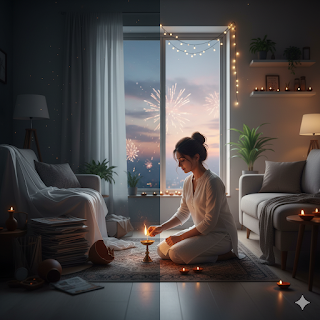
While the world prepares for the grand spectacle of लक्ष्मी पूजा (Lakshmi Pooja), ta quieter yet deeply spiritual day comes first – नरक चौदस (Narak Chaudas), रूप चौदस (Roop Chaudas) or छोटी दिवाली (Chhoti Diwali). This day focuses on inner and outer cleansing. It reminds us to remove darkness before welcoming the light.
The Legend of Narak Chaturdashi
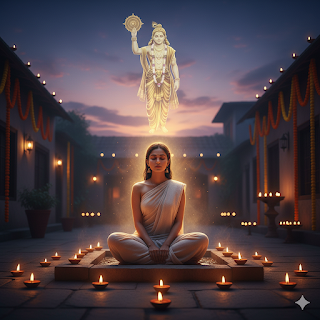
According to legend, the demon नरकासुर (Narkasura) terrorized heaven and earth. भगवान श्रीकृष्ण (Lord Krishna). defeated him in a fierce battle. Narkasura had imprisoned 16,000 women, and Lord Krishna freed them all. Out of compassion, he accepted them as his consorts.
The people celebrated this victory with light and joy, giving birth to the name छोटी दिवाली (Chhoti Diwali). The story represents the victory of good over evil and light over darkness.
This festival centers on purity and radiance. The sacred oil bath, known as अभ्यंग स्नान (Abhyang Snan), symbolizes cleansing the body and mind. It also encourages us to let go of lethargy, ego, and spiritual darkness.
Roop Chaudas – The Celebration of Beauty
In Gujarat and Rajasthan, this day is known as रूप चौदस (Roop Chaudas), where “Roop” means beauty. People perform अभ्यंग स्नान (Abhyang Snan) using उबटन (Ubtan) to enhance their natural glow. The ritual focuses on self-care, health, and confidence before the main Diwali celebration.
Regional Variations
काली चौदस (Kali Chaudas) – Celebrated in Maharashtra, Gujarat, and parts of Rajasthan. Devotees worship माँ काली / महाकाली (Goddess Kali / Mahakali) for strength and protection. Many also perform हनुमान पूजा (Hanuman Pooja) to remove laziness and negativity.
भूत चतुर्दशी (Bhoot Chaturdashi) – In West Bengal and Assam, people light 14 diyas in every corner of the house to guide ancestors and ward off evil. It is believed that 14 ancestors visit their families on this night.
छोटी दिवाली (Chhoti Diwali) – In North India, families clean, decorate, and light lamps a day before the main festival.
दीपावली नरक चतुर्दशी (Deepawali Narak Chaturdashi) – In Tamil Nadu and Karnataka, people celebrate Lord Krishna’s victory over Narkasura with sacred baths and fireworks. Crackers are burst on this day instead of Amavasya.
In Goa, large paper effigies of Narkasura filled with grass and firecrackers are burnt before sunrise. The ritual marks his defeat and the removal of evil.
In Maharashtra and Goa, people crush bitter fruits like करेत (Kareet) or कारटुला (Kartula) under their feet. This act symbolizes crushing ego, hatred, and the demon within.
Conclusion
नरक चतुर्दशी (Narak Chaturdashi) is not just a prelude to Diwali — it is its spiritual foundation. The day teaches that light cannot enter until darkness is destroyed.
Lord Krishna’s triumph over Narkasura reaffirms the power of धर्म (Dharma) over evil. The sacred oil bath washes away sin, fear, and negativity. By Diwali, every heart and home shines with clarity, protection, and hope.
Narak Chaturdashi stands as a timeless reminder: before new light appears, the darkness of the old must be conquered.